


In the world of precision measurement, load cells are the foundation of accurate weighing systems. They convert mechanical force into electrical signals, allowing industries to measure loads with remarkable accuracy. However, the raw signals produced by load cells are extremely weak—often just a few millivolts. These signals can be easily distorted by long cable runs, electrical noise, or harsh industrial environments.
This is where a load cell amplifier comes into play. By boosting the signal strength while preserving accuracy, load cell amplifiers ensure that weighing systems remain reliable and precise. But when exactly should you use them, and why are they so critical in certain applications? Let’s break it down.
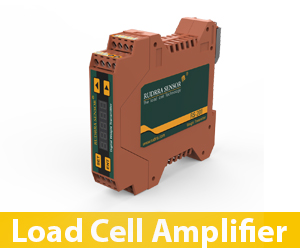
What is a Load Cell Amplifier?
A load cell amplifier (also known as a signal conditioner) is an electronic device that takes the low-level output from a load cell and amplifies it into a stronger, more usable signal. Typically, it converts millivolt signals (mV/V) into higher-voltage, current, or digital outputs (such as 0–10 V, 4–20 mA, or RS-485).
By strengthening the signal, amplifiers make it easier for downstream devices—such as indicators, controllers, or PLCs—to interpret weight data without interference or error.
Why Do Load Cell Signals Need Amplification?
Load cell outputs are usually in the range of 2–3 mV/V at full scale, which is extremely small. This makes them vulnerable to:
- Electrical Noise – EMI and RFI interference from motors, welding equipment, or power lines can distort signals.
- Long Cable Runs – The longer the distance between load cell and controller, the weaker and noisier the signal becomes.
- Temperature Fluctuations – Extreme environments can affect sensitivity and create unstable readings.
- Multiple Load Cells – When multiple sensors are connected, signal levels may drop even further.
By using a load cell amplifier, you increase the signal-to-noise ratio, ensuring stable and accurate measurements even under tough conditions.
When to Use Load Cell Amplifiers
You don’t always need an amplifier—but in the following situations, they are highly recommended:
1. Long-Distance Signal Transmission
When load cells are installed far from the weighing controller or PLC, the weak signals can degrade. Amplifiers convert them into stronger voltage or current signals suitable for long-distance transmission.
2. Noisy Industrial Environments
Factories with motors, welders, or high-voltage equipment generate electrical noise. Amplifiers help maintain clean, stable signals by boosting them above the noise floor.
3. Integration with PLCs and Automation Systems
Most PLCs and industrial controllers cannot directly process millivolt signals. Load cell amplifiers provide compatible outputs (e.g., 4–20 mA, 0–10 V, Modbus, Profibus), ensuring seamless integration.
4. Multiple Load Cell Systems
In large-scale platforms or tanks with several load cells, amplifiers balance and boost the combined output for reliable readings.
5. Harsh Operating Conditions
Extreme temperatures, vibrations, or outdoor installations demand robust signal conditioning. Amplifiers ensure consistent performance even in demanding environments.
Key Benefits of Using Load Cell Amplifiers
- Improved Accuracy – Maintains integrity of measurement signals.
- Extended Cable Lengths – Allows load cells to be installed far from the display or controller.
- Better Noise Immunity – Reduces susceptibility to electromagnetic interference.
- Flexible Outputs – Provides analog or digital outputs compatible with a wide range of equipment.
- Enhanced System Reliability – Ensures stable and repeatable weight readings.
Features to Look for in a Load Cell Amplifier
When selecting an amplifier, focus on these important features:
- Signal Compatibility – Ensure it matches your load cell type (strain gauge, digital, etc.).
- Output Options – Choose based on your system requirements (voltage, current, or digital).
- Calibration Functions – Look for easy auto or manual calibration.
- Temperature Stability – Select models designed to withstand operating conditions.
- Size and Mounting Options – Compact, DIN-rail, or panel-mount amplifiers depending on your installation.
- Isolation and Filtering – To protect against noise and grounding issues.
Industries That Rely on Load Cell Amplifiers
- Manufacturing Plants – For process automation and batch weighing.
- Construction and Heavy Equipment – For crane load monitoring and structural testing.
- Food & Beverage – For blending, batching, and packaging.
- Pharmaceuticals – For high-precision weighing in cleanrooms.
- Agriculture – For silo, feed, and fertilizer weighing.
- Logistics & Transport – For truck scales and cargo management.
Conclusion
A load cell amplifier is not just an accessory—it’s often a necessity for reliable, accurate, and efficient weighing systems. Whenever your application involves long cable runs, noisy environments, or PLC integration, an amplifier ensures that weak millivolt signals are transformed into strong, stable outputs.
By choosing the right amplifier with the right features, you can boost signal strength without sacrificing accuracy, ensuring your weighing system performs flawlessly in any industrial setting.