


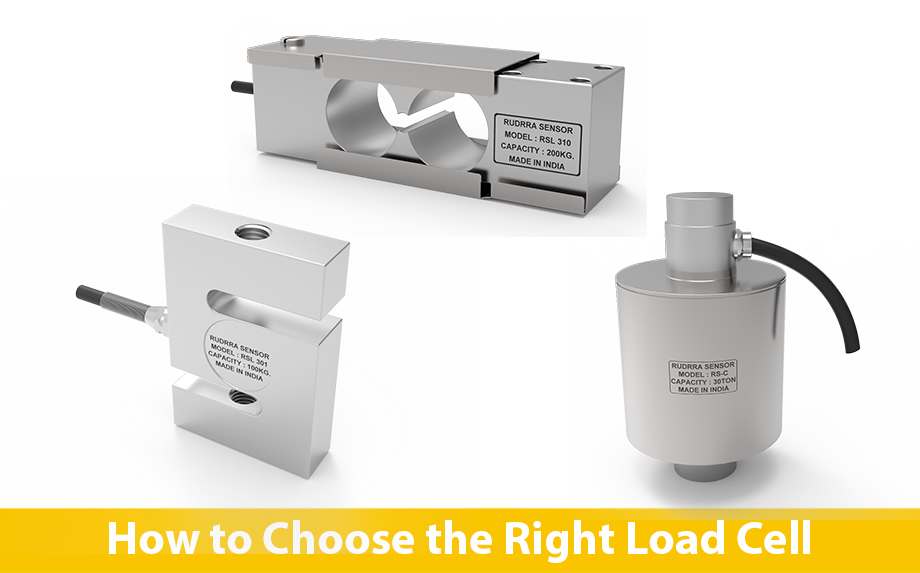
Introduction
Whether you run a manufacturing plant, a food processing unit, a logistics hub, or a pharmaceutical facility — accurate weight and force measurement is at the core of your operations. And at the heart of that measurement lies a small but mighty device: the load cell.
The global load cell market was valued at over USD 3.5 billion in 2023 and is growing steadily as industries automate, digitize, and demand higher accuracy than ever before. From the scale on your shipping dock to the tension sensor on a crane boom, load cells are everywhere.
Yet despite their ubiquity, choosing the wrong load cell remains one of the most common and costly mistakes businesses make. A mismatch in capacity, material, IP rating, or signal type can result in:
- Inaccurate measurements that compromise product quality or regulatory compliance
- Premature sensor failure that forces costly unplanned downtime
- Safety hazards in environments involving heavy loads or hazardous materials
- Failed audits due to non-compliance with legal metrology requirements
This guide was written for business owners, procurement managers, and operational decision-makers who need to make the right load cell purchase — without requiring an engineering degree to do it. We will walk you through every factor that matters: types, capacity, accuracy, environment, materials, signal output, certifications, suppliers, and total cost of ownership.
By the end, you will have the knowledge and the tools to make a confident, well-informed load cell purchase for your specific application.
What is a Load Cell?
A load cell is a type of force transducer — a device that converts a physical force (such as weight, compression, tension, or torque) into an electrical signal that can be measured and recorded by a display, controller, or data system.
Think of it as the bridge between the physical world of weight and pressure, and the digital world of data and control systems. Without the load cell, your weighing indicator has nothing to measure. Without accurate data from the load cell, your entire process — whether it’s dosing chemicals, filling containers, or checking product weights — is blind.
Where Are Load Cells Used?
Load cells are used across virtually every industry:
- Manufacturing: Checkweighers, batch mixers, presses, and assembly line force monitoring
- Logistics & Warehousing: Platform scales, truck scales, conveyor weighing systems
- Food & Beverage: Ingredient dosing, filling machines, recipe control, checkweighing
- Pharmaceutical: Tablet compression, powder filling, batch verification
- Agriculture: Grain silo management, livestock weighing, fertiliser dosing
- Construction: Crane load monitoring, structural health monitoring, pile testing
- Oil & Gas: Pipe tension, drilling force, mooring line tension
- Retail & Trade: Legal-for-trade commercial scales, jewellery scales, postal scales
Key Insight: Load cells do not just measure weight. They measure any kind of force — tension, compression, shear, bending, or torque — and convert it into usable data. This is why selecting the right type for your specific force direction is critical.
How Load Cells Work: The Science Behind the Sensor
Understanding the basic working principle of a load cell will help you make smarter purchasing decisions and better troubleshoot issues down the line.
The Strain Gauge Principle
The vast majority of modern load cells operate using strain gauges — thin, resistive foil elements bonded to a metal body (called the spring element). Here is the step-by-step process:
- Force is applied: A weight or force is placed on or attached to the load cell body.
- The spring element deforms: The metal body (made of steel or aluminium) flexes or compresses slightly — often by just a few thousandths of a millimetre.
- Strain gauges detect the deformation: The bonded strain gauges stretch or compress proportionally to the force applied, changing their electrical resistance.
- The Wheatstone Bridge converts resistance to voltage: Four strain gauges are wired in a Wheatstone Bridge configuration. When resistance changes, the bridge becomes unbalanced and produces a millivolt output signal (mV).
- The signal is transmitted: This small electrical signal is sent to a weighing indicator, PLC, or data acquisition system, which amplifies, converts, and displays the reading.
The Wheatstone Bridge Configuration
All high-quality load cells use a full Wheatstone Bridge with four active strain gauges (two in tension, two in compression). This configuration:
- Cancels out temperature-induced errors (thermal compensation)
- Doubles the output signal compared to a half-bridge
- Automatically corrects for off-axis loading errors
- Provides exceptional repeatability and stability
Other Transduction Technologies
While strain gauge load cells dominate the market, some niche applications use alternative technologies:
| Technology | Working Principle | Typical Application |
| Strain Gauge | Resistance change via deformation | General industrial, trade, precision |
| Piezoelectric | Crystal generates charge under force | Dynamic/impact force measurement |
| Hydraulic | Force transmitted through fluid pressure | Very high capacities, hazardous areas |
| Pneumatic | Air pressure balances the applied force | Hygienic/food, ATEX environments |
| Capacitive | Capacitance changes under load | Ultra-low force, medical devices |
The 7 Main Types of Load Cells Explained
Choosing the right type of load cell is the single most important decision you will make. The type determines how force flows through the sensor and whether it matches your application geometry. Getting this wrong means inaccurate readings — even if every other specification is perfect.
4.1 Compression Load Cells
Compression load cells are designed to measure forces that push down on them. They are among the most common type in heavy industry.
- Configuration: The force presses directly on the top surface of the cell
- Capacities: Typically 500 kg to 1,000 tonnes
- Common designs: Canister (cylindrical), disc, and pancake
- Best for: Tank and silo weighing, hopper scales, truck scales, platform scales, press force monitoring
Pro Tip: Compression cells require a flat, stable mounting surface and proper alignment. Side loading or tilting will cause errors. Always use proper mounting hardware and check levels during installation.
4.2 Tension Load Cells (S-Type / S-Beam)
Tension load cells — often called S-type or S-beam because of their distinctive S-shaped body — measure pulling or hanging forces.
- Configuration: Force is applied through threaded end connections at both top and bottom
- Capacities: Typically 50 kg to 50 tonnes
- Best for: Crane scales, hanging hoppers, wire tension, force testing machines, material testing
- Versatility: Can also measure compression — making them popular for test benches that need both
Pro Tip: Always use safety retaining nuts and cables when using S-type cells in overhead lifting applications. A failure under tension in an overhead crane scenario can be catastrophic.
4.3 Shear Beam Load Cells
Shear beam load cells detect the shear force that acts along a beam when a load is applied. They are extremely robust and are workhorses of the industrial weighing world.
- Configuration: One end is fixed to a frame; the load is applied to the other end
- Capacities: Typically 100 kg to 100 tonnes
- Best for: Multi-cell platform scales, truck weighbridges, floor scales, conveyor scales
- Advantages: Very low profile, highly stable, insensitive to off-centre loads when properly mounted
Pro Tip: Shear beam cells are ideal for multi-corner weighing platforms because they are less sensitive to torsional loads than bending beam cells. Use four corner cells with a summing junction box for platform weighing.
4.4 Bending Beam Load Cells
Bending beam load cells work when a load bends the beam. They are suitable for lighter, more precise applications and are extremely common in bench and retail weighing.
- Configuration: One end is fixed; force is applied at the free end, bending the beam
- Capacities: Typically 5 kg to 5 tonnes
- Best for: Bench scales, conveyor belt weighers, packaging line scales, food portion scales
- Subtypes: Double-ended bending beam (more stable) and single-ended
4.5 Single Point Load Cells
Single point load cells are unique because they measure accurately regardless of where the load is placed on the platform — even if the load is off-centre. A single cell can support an entire platform.
- Capacities: Typically 1 kg to 1,000 kg
- Best for: Retail scales, postal/parcel scales, veterinary scales, laboratory balances, small conveyor scales
- Advantage: One cell replaces four bending beam cells, reducing cost and complexity
Pro Tip: Single point cells are specified by platform size. A cell rated for up to 400 × 400 mm will give inaccurate readings if used with a larger platform. Always match the cell’s rated platform size to your actual platform.
4.6 Pancake / Low Profile Load Cells
Pancake or disc-type load cells are extremely flat, making them ideal where vertical space is limited. They are designed for high-capacity compression measurement in very tight installation spaces.
- Capacities: Typically 500 kg to 2,000 tonnes
- Best for: Press monitoring, structural testing, bolted joint monitoring, bridge testing
- Key advantage: Very high overload capacity (often 150–200% of rated capacity)
4.7 Beam Load Cells for Tanks and Silos
Specifically engineered for tank, hopper, and silo weighing, these cells combine the load cell function with a mounting kit. They typically work in sets of three or four, supporting the vessel from below.
- Types: Rocker pin, canister with mount, double-ended shear beam
- Capacities: High — typically 5 tonnes to 500 tonnes per cell
- Key feature: Built-in overload protection, thermal expansion compensation, and side-load rejection
Key Technical Specifications — Decoded
Load cell datasheets are filled with technical specifications. Understanding these will help you compare cells objectively and avoid being misled by marketing claims.
5.1 Rated Output (RO)
Expressed in millivolts per volt (mV/V), this is the electrical signal the load cell produces when its rated capacity is fully loaded.
- Standard is 2 mV/V
- Higher output (3 mV/V) improves signal-to-noise ratio in noisy environments
- Lower excitation voltage indicators work better with higher RO cells
5.2 Non-Linearity
Non-linearity describes how closely the output follows a perfect straight line from zero to full capacity. It is expressed as a percentage of rated output (% RO).
- Typical industrial: ±0.03% RO
- Precision cells: ±0.01% RO or better
- Lower is better
5.3 Hysteresis
Hysteresis is the difference in output for the same load, depending on whether you are loading or unloading the cell. It is caused by internal friction in the spring element material.
- Typical industrial: ±0.03% RO
- Well-manufactured alloy steel or stainless steel cells have very low hysteresis
- High hysteresis is a common problem with low-quality load cells
5.4 Combined Error
Combined error is the combined worst-case value of non-linearity and hysteresis. It gives you the most realistic picture of accuracy in a dynamic process.
Rule of Thumb: For most business applications, look for a combined error of ±0.03% RO or better. For precision laboratory or pharmaceutical use, require ±0.01% RO.
5.5 Repeatability
Repeatability is the ability of the load cell to return the same output for the same input load, under the same conditions. This is arguably the most operationally important specification.
- Good cells: ±0.01% RO
- Critical for automated processes where the same container is filled repeatedly
5.6 Temperature Effect on Zero and Span
Temperature changes affect both the zero output (even with no load) and the span (the gain). Manufacturers specify:
- Temperature effect on zero: Typical ±0.02% RO per 10°C change
- Temperature effect on span: Typical ±0.02% of load per 10°C change
- Cells with active temperature compensation circuitry perform far better in variable-temperature environments
5.7 Safe Overload and Ultimate Overload
These specify how much overload the cell can handle:
- Safe Overload (typically 150% of capacity): The cell can be overloaded to this level without permanent damage
- Ultimate Overload (typically 300% of capacity): The maximum load before the cell structurally fails
Warning: Repeatedly overloading a load cell — even within the safe overload range — will cause fatigue and reduce its working life. Always add a safety factor to your capacity selection.
5.8 Input and Output Resistance
These values (in ohms) must be compatible with your indicator or signal conditioner. Standard cells are typically:
- Input resistance: 350–400 Ω
- Output resistance: 350 Ω
- Multiple cells wired in parallel require summing junction boxes that match impedances
5.9 Excitation Voltage
The supply voltage required to power the load cell, typically 5V DC or 10V DC. Must match your indicator’s excitation output. Using the wrong excitation voltage will produce incorrect readings or damage the cell.
| Specification | Typical Value | What to Look For |
| Rated Output | 2 mV/V | Higher is better for noisy environments |
| Non-Linearity | ≤ ±0.03% RO | Lower is better |
| Hysteresis | ≤ ±0.03% RO | Lower is better |
| Combined Error | ≤ ±0.03% RO | Key accuracy spec |
| Repeatability | ≤ ±0.01% RO | Critical for process control |
| Safe Overload | 150% of capacity | Higher is safer |
| Excitation Voltage | 5V or 10V DC | Must match your indicator |
| Operating Temp. | −10°C to +40°C (standard) | Extended range for outdoor use |
How to Choose the Right Capacity
Capacity selection is where most purchasing mistakes happen. Businesses tend to either underestimate (risking damage and inaccuracy) or wildly overestimate (sacrificing measurement resolution).
The Capacity Formula
Use this formula to calculate the minimum required capacity:
Required Capacity = (Maximum Process Load + Dead Load) × Safety Factor
- Maximum Process Load: The heaviest weight your process will ever place on the cell
- Dead Load: The weight of the platform, vessel, conveyor, or structure that sits permanently on the cell
- Safety Factor: Typically 1.25× for controlled environments; 1.5× for dynamic loads; 2× for outdoor or high-impact applications
Worked Examples
Example 1: Liquid Tank Weighing
You are weighing a chemical storage tank. The empty tank weighs 800 kg and the maximum liquid load is 3,000 kg. The installation is indoors.
- Maximum Process Load: 3,000 kg
- Dead Load: 800 kg
- Safety Factor: 1.5 (dynamic liquid loads create surges)
Required capacity per cell: (3,000 + 800) × 1.5 = 5,700 kg. With 4 cells: 5,700 ÷ 4 = 1,425 kg per cell → choose 2,000 kg cells.
Example 2: Packaging Line Scale
A conveyor scale measures product boxes up to 50 kg. The conveyor belt and frame weigh 20 kg. High-speed dynamic loading.
- Maximum Process Load: 50 kg
- Dead Load: 20 kg
- Safety Factor: 2.0 (dynamic impact from product landing on belt)
Required capacity: (50 + 20) × 2.0 = 140 kg → choose a 150 kg or 200 kg load cell.
Why Not Just Buy the Biggest Capacity Available?
A 50-tonne load cell measuring 50 kg loads will produce an output of just 0.001 mV/V — far too small for most indicators to resolve accurately. This is called poor resolution, and it defeats the purpose of using a load cell entirely.
Golden Rule: For best resolution and accuracy, your typical working load should be between 20% and 80% of the load cell’s rated capacity. Below 20%, resolution suffers. Above 80%, you risk exceeding the safe overload under dynamic conditions.
| Application | Typical Max Load | Recommended Capacity Range |
| Jewellery / Lab balances | 100 g – 2 kg | 200 g – 5 kg |
| Postal / retail scales | 5 kg – 30 kg | 10 kg – 50 kg |
| Bench / portion scales | 30 kg – 150 kg | 50 kg – 200 kg |
| Packaging line conveyor | 50 kg – 500 kg | 100 kg – 1,000 kg |
| Platform / floor scales | 500 kg – 5,000 kg | 1 t – 10 t |
| Tank / silo weighing | 1 t – 100 t | 2 t – 200 t (per cell) |
| Truck / axle weighing | 10 t – 60 t | 20 t – 100 t (per cell) |
| Crane / hoist monitoring | 1 t – 500 t | 2 t – 1,000 t |
Environmental Considerations & IP Ratings
A load cell that works perfectly in a lab will fail rapidly in a dusty warehouse. One rated for splash resistance will be destroyed by high-pressure washdowns in a meat processing plant. Environmental matching is just as critical as capacity matching.
Understanding IP Ratings
IP (Ingress Protection) ratings are defined by IEC 60529 and describe a product’s resistance to solid particles (first digit) and liquids (second digit).
| IP Rating | Dust Protection | Water Protection | Recommended Environment |
| IP54 | Partial (dust limited) | Splash from any direction | Light indoor, dry storage |
| IP65 | Dust-tight (complete) | Low-pressure water jets | Dusty factories, warehouses |
| IP66 | Dust-tight | High-pressure water jets | Outdoor, heavy washdown |
| IP67 | Dust-tight | Immersion up to 1 m / 30 min | Food processing, wet areas |
| IP68 | Dust-tight | Continuous submersion | Underwater applications |
| IP69K | Dust-tight | High-pressure, high-temp steam | Food/beverage, pharma washdown |
Choosing the Right IP Rating for Your Industry
- Dry indoor environments (offices, labs, controlled rooms): IP54 is adequate
- Dusty manufacturing or warehousing: IP65 as minimum
- Food and beverage processing: IP67 or IP69K — mandatory for hygiene and regular washdown
- Pharmaceutical and biotech: IP67 or IP69K with stainless steel housing
- Outdoor (weighbridges, silos, agriculture): IP67 minimum; IP68 for flood-prone areas
- Underwater (subsea, ports): IP68 with hermetically sealed cable entry
Critical Note for Food & Pharma: IP69K is tested with water at 80°C and 80–100 bar pressure from 0.1–0.15 m distance. If your facility uses steam cleaning or high-pressure CIP (clean-in-place) systems, IP69K is non-negotiable — IP67 will fail.
Other Environmental Factors
Temperature Range
Standard load cells operate from −10°C to +40°C. Extended-range cells are available for:
- High-temperature applications (foundries, kilns, ovens): up to +120°C or +200°C
- Cold storage and freezer applications: −40°C or lower
- Always check both the operating range and the storage range
Humidity and Corrosive Atmospheres
- Standard cells typically rated to 90% relative humidity, non-condensing
- For humid environments, hermetically sealed cells are preferred
- Chemical plants, coastal installations, and battery facilities require corrosion-resistant materials
Explosive and Hazardous Atmospheres
If your facility handles flammable gases, vapours, dust, or fibres, you must use ATEX-certified (in Europe) or IECEx-certified (internationally) load cells. These are specifically designed to prevent ignition sources in explosive atmospheres.
Legal Requirement: Using standard (non-ATEX) electrical equipment in Zone 0, 1, or 2 classified areas is illegal and extremely dangerous. ATEX certification is mandatory, not optional.
Material & Construction Guide
The material of the spring element (the body that flexes under load) determines the cell’s capacity range, corrosion resistance, hygienic suitability, and price.
| Material | Advantages | Disadvantages | Best For |
| Alloy Steel | High strength, wide capacity range, cost-effective | Prone to rust without coating | Heavy industrial, general purpose |
| Stainless Steel (SS 316L) | Corrosion-resistant, hygienic, excellent for wet areas | Higher cost, slightly less stiff than alloy steel | Food, pharma, chemical, outdoor |
| Aluminium (6061-T6) | Lightweight, cost-effective, good for low capacities | Lower capacity limit, softer — not for heavy use | Lab scales, retail, portable |
| Tool Steel | Extremely high stiffness, excellent fatigue life | Expensive, requires coating | Precision force testing, aerospace |
| Nickel-Plated Steel | Better corrosion resistance than bare alloy steel | Not truly food-safe, plating can wear | General industrial, mid-range |
Surface Treatments & Coatings
- Nickel plating: Common on alloy steel cells. Better than bare steel but not suitable for food contact
- Hard chrome: Excellent wear and corrosion resistance for demanding environments
- Epoxy coating: Added moisture protection; can degrade with chemical exposure
- Electroless nickel (EN): Uniform coating even in recesses; good chemical resistance
- Bare stainless (SS 316L): Best choice for food, pharmaceutical, and hygienic applications — no coating needed
Cable Entry and Sealing
The cable entry point is often the weakest link in a load cell’s IP rating. Look for:
- Hermetically sealed cable entries (welded or overmoulded) for IP67/IP68/IP69K cells
- Strain relief to prevent cable damage from vibration or repeated flexing
- Shielded cable to minimise electromagnetic interference (EMI)
- Cable length sufficient for your installation — extensions can introduce errors if not properly matched
Output Signals & System Integration
The output signal is how the load cell communicates with your weighing system. Choosing the right signal type ensures compatibility with your existing infrastructure and unlocks the full potential of your measurement system.
9.1 Analogue mV/V Output (Classic Standard)
The traditional and most widely compatible output. The load cell produces a small millivolt signal proportional to the load.
- Typical output: 2 mV/V at full capacity (e.g., 10V excitation → 20 mV output at full load)
- Advantages: Universally compatible with almost all indicators and junction boxes
- Disadvantages: Susceptible to noise on long cable runs; signal amplification required
- Maximum recommended cable length: 30–50 metres without amplification
9.2 4–20 mA Current Loop Output
The cell includes a built-in signal conditioner that converts the mV/V signal to a 4–20 mA current loop.
- Advantages: Immune to voltage drops and electrical noise; suitable for cable runs of 300+ metres
- Disadvantages: Requires external power supply; higher unit cost
- Best for: Remote silo or tank installations, long cable runs in industrial environments
9.3 0–10V Voltage Output
Similar to 4–20 mA but uses a voltage signal. Common in data acquisition and control systems.
- Advantages: Easy to interface with PLCs, DAQ systems, and SCADA
- Best for: Building automation, test benches, process control systems
9.4 Digital Output (RS-232 / RS-485 / Modbus)
The load cell or integrated transmitter outputs a digital protocol signal that can be read directly by a PLC, PC, or industrial computer.
- RS-485 / Modbus RTU: Most common for industrial use; multi-drop capability (up to 32 devices on one cable)
- Advantages: Immune to noise, long cable runs, no analogue-to-digital conversion error
- Best for: Modern Industry 4.0 plants, automated lines, multi-point weighing networks
9.5 Fieldbus and Industrial Ethernet
For the most demanding integration requirements, load cell transmitters are available with direct Fieldbus or Industrial Ethernet output:
- PROFIBUS, PROFINET, EtherNet/IP, CANopen, DeviceNet
- Enable real-time weight data directly on the factory automation network
- Plug-and-play integration with major PLC platforms (Siemens, Rockwell, B&R, etc.)
| Output Type | Best Cable Length | Noise Immunity | Best Application |
| mV/V analogue | Up to 50 m | Low | Standard industrial, close to indicator |
| 4–20 mA current | Up to 300 m+ | High | Remote tanks, silos, outdoor |
| 0–10V voltage | Up to 100 m | Medium | PLCs, DAQ, SCADA |
| RS-485 / Modbus | Up to 1,200 m | Very High | Industrial networks, Industry 4.0 |
| Fieldbus/Ethernet | Up to 100 m (switch) | Very High | Smart factories, real-time control |
Industry-Wise Application Guide
Different industries have distinct requirements. Here is a sector-by-sector guide to help you match load cell specifications to your operational reality.
10.1 Food & Beverage Processing
- Critical requirements: IP69K, SS 316L stainless steel, FDA-compliant materials, hygienic design (no crevices where bacteria can grow)
- Recommended type: Single point or bending beam for portioning; compression or shear beam for tank/silo
- Certifications needed: OIML, NTEP (for legal trade), 3-A (for dairy), EHEDG (for Europe)
- Key challenge: Thermal shock from steam cleaning — choose cells with wide temperature cycling tolerance
10.2 Pharmaceutical & Life Sciences
- Critical requirements: High accuracy (Class C4–C6), IP67+, SS 316L, traceable calibration, validation support (IQ/OQ/PQ)
- Recommended type: Single point, bending beam, or precision tension cells
- Key challenge: GMP (Good Manufacturing Practice) compliance requires full calibration documentation and regular re-verification
- Certifications: OIML, USP, EC Pharmacopoeia compliance
10.3 Logistics & Warehousing
- Critical requirements: Robust construction, moderate to high capacity, legal-for-trade compliance, low maintenance
- Recommended type: Shear beam for platform scales, compression for floor-mounted scales, S-type for overhead weighing
- Key challenge: Fork-lift and pallet jack impacts cause shock loads — always use shock-rated cells with high safe overload rating
10.4 Agriculture & Grain Handling
- Critical requirements: Outdoor rating (IP67+), wide temperature range, high capacity, simple maintenance
- Recommended type: Compression or shear beam for silo/hopper; canister for large-scale grain storage
- Key challenge: Dust, humidity, and large thermal swings. Hermetically sealed cells are essential
10.5 Chemical & Oil/Gas
- Critical requirements: ATEX/IECEx certification for hazardous areas, chemical resistance, remote monitoring
- Recommended type: Compression for tanks, S-type for pipeline tension, pancake for structural monitoring
- Key challenge: Corrosive chemicals require specialised coatings or full SS 316L. Explosive atmospheres require intrinsic safety (IS) or explosion-proof (Ex d) certification
10.6 Manufacturing & Assembly
- Critical requirements: High repeatability, dynamic response, integration with PLC/SCADA, compact form factor
- Recommended type: Bending beam or single point for in-line checking; S-type or pancake for press and assembly monitoring
- Key challenge: Dynamic loading during high-speed production — choose cells with fast response time and high overload capacity
Certifications & Regulatory Compliance
For many applications, certifications are not optional — they are legal requirements. Buying uncertified load cells for trade use can result in fines, shutdowns, and loss of business licences.
| Certification | Issued By | Requirement | Applies Where |
| OIML R60 | International OIML | Legal-for-trade weighing | Global — most countries |
| NTEP | NCWM (USA) | Legal-for-trade (USA) | United States |
| MID 2014/32/EU | European Commission | Trade measurement (EU) | European Union |
| ATEX / IECEx | Notified bodies / IECEx | Explosive atmospheres | Global hazardous areas |
| FDA 21 CFR | US FDA | Food contact compliance | USA food/pharma |
| 3-A | 3-A SSI | Dairy hygienic equipment | Dairy industries worldwide |
| EHEDG | EHEDG | Hygienic design (Europe) | Food/pharma in EU |
| ISO 376 | ISO | Calibration reference | Force calibration labs |
| Legal Metrology Act | Govt. of India (WDMI) | Trade use in India | India |
Calibration Traceability
For regulated industries (pharmaceutical, food, aerospace), calibration must be traceable to national standards (NABL in India, NIST in the USA, NPL in the UK, PTB in Germany). Traceable calibration means:
- The load cell was calibrated against reference weights that are themselves certified against a national standard
- A calibration certificate with measurement uncertainty is issued
- The calibration has a defined validity period (typically 12 months for industrial use; 6 months for pharmaceutical)
Total Cost of Ownership
The purchase price of a load cell is just the beginning. A smart buyer considers the total cost of ownership (TCO) over the expected service life.
| Cost Element | What It Includes | Typical Impact |
| Purchase Price | Unit cost, shipping, import duties | 15–30% of TCO |
| Installation | Mounting hardware, wiring, commissioning | 10–20% of TCO |
| Calibration | Initial + annual re-calibration costs | 15–25% of TCO |
| Maintenance | Cleaning, inspection, cable replacement | 10–15% of TCO |
| Downtime Costs | Production loss from failures/replacements | 20–40% of TCO |
| Replacement Parts | Spare cells, junction boxes, cables | 5–15% of TCO |
Business Reality: A cheap load cell that fails every 18 months — causing 8 hours of downtime each time — will cost far more over 10 years than a premium cell with a 10-year service life. Always calculate the 5-year or 10-year TCO before making a purchase decision.
Lifetime Expectancy by Quality Tier
| Quality Tier | Typical Price (indicative) | Expected Service Life | Support Level |
| Economy / Generic | Low | 1–3 years | Minimal |
| Mid-Range Industrial | Medium | 5–8 years | Standard warranty |
| Premium / OEM | High | 10–15 years | Full technical support |
| Precision / Certified | Very High | 15–20+ years | Traceable calibration, validation |
Common Mistakes Businesses Make When Buying Load Cells
Understanding common mistakes helps you avoid them before they cost you money.
Mistake 1: Choosing Capacity Based on Maximum Process Load Only
Forgetting to add the dead load of the platform or vessel and a proper safety factor results in a cell that is underspecified. Even moderate shocks or vibrations can exceed the rated capacity, causing damage and drift.
Mistake 2: Ignoring the Environment
Purchasing a standard IP54 cell for a food plant or outdoor application is one of the most frequent and costly errors. Moisture, washdowns, and condensation penetrate inadequately rated cells within weeks, causing corrosion, signal drift, and failure.
Mistake 3: Mismatching Signal Output to the Indicator
A 4–20 mA output load cell connected to an indicator expecting mV/V will produce no reading or a completely incorrect one. Always verify compatibility between the load cell output and your indicator input before purchase.
Mistake 4: Buying on Price Alone
Ultra-low-cost load cells from unknown manufacturers often have poor accuracy, high hysteresis, and short service lives. A cell that drifts by 0.5% over six months is costing you in product giveaway (overfilling) or customer complaints (underfilling).
Mistake 5: Not Specifying IP Rating for Washdown Areas
Even in environments that appear ‘not that wet’, cleaning crews with hoses can destroy an IP54 or IP65 cell. When in doubt, specify one IP level higher than you think you need.
Mistake 6: Skipping Certifications for Trade Use
Using non-certified load cells in legal-for-trade applications (selling goods by weight) is a violation of the Legal Metrology Act in India and equivalent laws worldwide. Penalties include fines, product seizure, and business licence suspension.
Mistake 7: Neglecting Cable Management
Load cell cables are low-voltage, low-current signal cables — they are extremely susceptible to electromagnetic interference. Running them alongside power cables, inverters, or motors without shielding causes noisy, unstable readings.
Mistake 8: No Spare Inventory
A critical production line going down because a load cell has failed — and the replacement is 6–8 weeks away from the manufacturer — is an entirely avoidable situation. Always keep at least one spare cell per critical installation.
Maintenance & Calibration Best Practices
Even the highest quality load cell requires periodic attention to maintain its accuracy and service life.
Routine Maintenance Tasks
- Visual inspection (monthly): Check for physical damage, corrosion, cable fraying, moisture ingress, or unusual settling of mounting hardware
- Zero check (weekly or daily): With no load applied, verify the indicator reads zero. Persistent non-zero indicates drift or damage
- Span verification (monthly): Apply a known reference weight and verify the reading matches within tolerance
- Cable inspection (quarterly): Check for kinks, abrasion, connector corrosion, and secure strain relief
- Mounting hardware check (quarterly): Verify bolts and mounting feet are secure and aligned
- Cleaning (as required): Use appropriate cleaning methods — avoid high-pressure washing on non-IP69K cells
Calibration Schedule
| Industry | Recommended Calibration Interval | Notes |
| Legal-for-trade retail | Every 6–12 months | Mandated by Legal Metrology regulations |
| Food & beverage | Every 6–12 months | HACCP and food safety requirements |
| Pharmaceutical | Every 6 months or as per SOP | GMP requirement; IQ/OQ/PQ documentation |
| General industrial | Every 12 months | Best practice for process control |
| Aerospace / Defence | Per contract / standard | Strict traceability requirements |
When to Replace a Load Cell
Even with proper maintenance, load cells have a finite service life. Replace when:
- Zero output cannot be restored by re-zeroing after removing all loads
- Readings are unstable or noisy even after checking all cables and connections
- Physical damage to the spring element body (dents, cracks, corrosion pitting)
- Cable or connector cannot be repaired and is not field-replaceable
- Calibration shows the cell no longer meets accuracy specifications
- The cell has experienced a confirmed overload event above its safe overload rating
How to Evaluate & Choose a Supplier
The load cell market includes hundreds of manufacturers and distributors — ranging from world-class precision instrument makers to low-cost importers. Choosing the right supplier is as important as choosing the right cell.
Key Supplier Evaluation Criteria
- Product Range & Specialisation: Does the supplier offer the type, capacity, and IP rating you need? Generalist distributors may not stock all types; specialist manufacturers offer better technical depth
- Certifications & Documentation: Can they provide OIML certificates, ATEX certificates, calibration certificates, and material traceability reports?
- Technical Support: Do they have application engineers who can help specify the right product? Can they assist with installation, calibration, and troubleshooting?
- Local After-Sales Service: Is there a local service centre or authorised calibration lab? Remote-only support is inadequate for critical applications
- Lead Time & Stock: What is the lead time for standard products? For critical applications, same-week delivery of replacements may be essential
- References & Track Record: Can they provide references from similar industries? How long have they been supplying to your sector?
- Warranty Terms: What does the warranty cover and for how long? Is on-site replacement available?
Questions to Ask Your Supplier
- What is the rated output (mV/V) and combined error for this specific model?
- Can you provide the OIML or NTEP certificate for this cell?
- What IP rating and spring element material does it use?
- What is the safe overload rating and how does the cell behave above it?
- What is the operating and compensated temperature range?
- Is calibration traceable to a national standard? Can you provide the certificate?
- What is the warranty period and what are the terms for field replacement?
- Do you offer on-site installation support and commissioning?
- What is the lead time for replacement units?
- Do you stock spare cables and mounting accessories?
Red Flags to Watch Out For
- No certifications available: Any supplier unable to provide OIML or calibration documents for their cells should be avoided for critical applications
- No local technical support: An overseas-only supplier with no local representation means you are on your own when problems arise
- Unusually low prices: Load cells at 30–50% below market price almost always involve compromised materials, accuracy, or manufacturing quality
- Vague or missing datasheets: A reputable manufacturer provides complete, detailed datasheets. Cells sold with minimal specifications are a risk
Complete Pre-Purchase Checklist
Use this checklist before placing any load cell order. Print it and work through it with your team and supplier.
Application Definition
- Defined the type of force to be measured (weight/compression/tension/shear)
- Identified the direction of the primary force
- Documented the maximum process load and dead load
- Calculated required capacity with appropriate safety factor
- Documented the physical space available for installation
Technical Specifications
- Selected appropriate load cell type for the application
- Verified capacity covers maximum load + dead load + safety factor
- Confirmed accuracy class meets process or legal requirements
- Checked operating temperature range covers your environment
- Verified IP rating is appropriate for the installation environment
- Confirmed spring element material is suitable (stainless for food/wet)
- Confirmed output signal type is compatible with your indicator or PLC
- Checked excitation voltage matches your indicator
- Confirmed cable length is sufficient or specified extension requirements
Certifications & Compliance
- OIML R60 / NTEP / MID certification confirmed if legal-for-trade
- ATEX / IECEx certification confirmed if hazardous area
- FDA / food-grade compliance confirmed if food or pharma
- Legal Metrology Act (India) compliance confirmed if required
- Calibration certificate with traceability will be supplied
Commercial & Supplier
- Supplier can provide full technical documentation and certificates
- Warranty terms reviewed and understood
- Lead time for standard and replacement units confirmed
- Local after-sales service and calibration support available
- Spare cell ordered for critical applications
- Total cost of ownership (5-year) calculated and compared
Conclusion
Choosing the right load cell for your business is not merely a technical exercise — it is a strategic decision that directly impacts your product quality, operational efficiency, regulatory compliance, and long-term profitability.
The wrong choice leads to inaccurate measurements, premature equipment failure, production downtime, and in regulated industries, serious legal consequences. The right choice — properly specified, correctly installed, and regularly maintained — will serve your business reliably for a decade or more.
To summarise the key principles of this guide:
- Match the type to your force direction: The most common mistake is using the wrong type for the application geometry
- Calculate capacity correctly: Always include dead load and an appropriate safety factor
- Specify the IP rating for your actual environment: When in doubt, go one level higher
- Choose the right material: Stainless steel (SS 316L) for food, wet, and corrosive environments
- Match the output signal to your system: Verify compatibility before you buy, not after
- Insist on certifications: Legal-for-trade, ATEX, and industry-specific certifications are not optional
- Calculate total cost of ownership: The cheapest cell is rarely the most economical choice over its lifetime
- Choose a supplier with local support: Technical expertise and fast replacement availability are priceless when you need them
Whether you are replacing a single bench scale cell or specifying load cells for a new automated production line, this guide gives you the knowledge to ask the right questions, compare options objectively, and make a purchase that will serve your business well for years to come.
For questions, contact your load cell supplier or instrumentation specialist.