


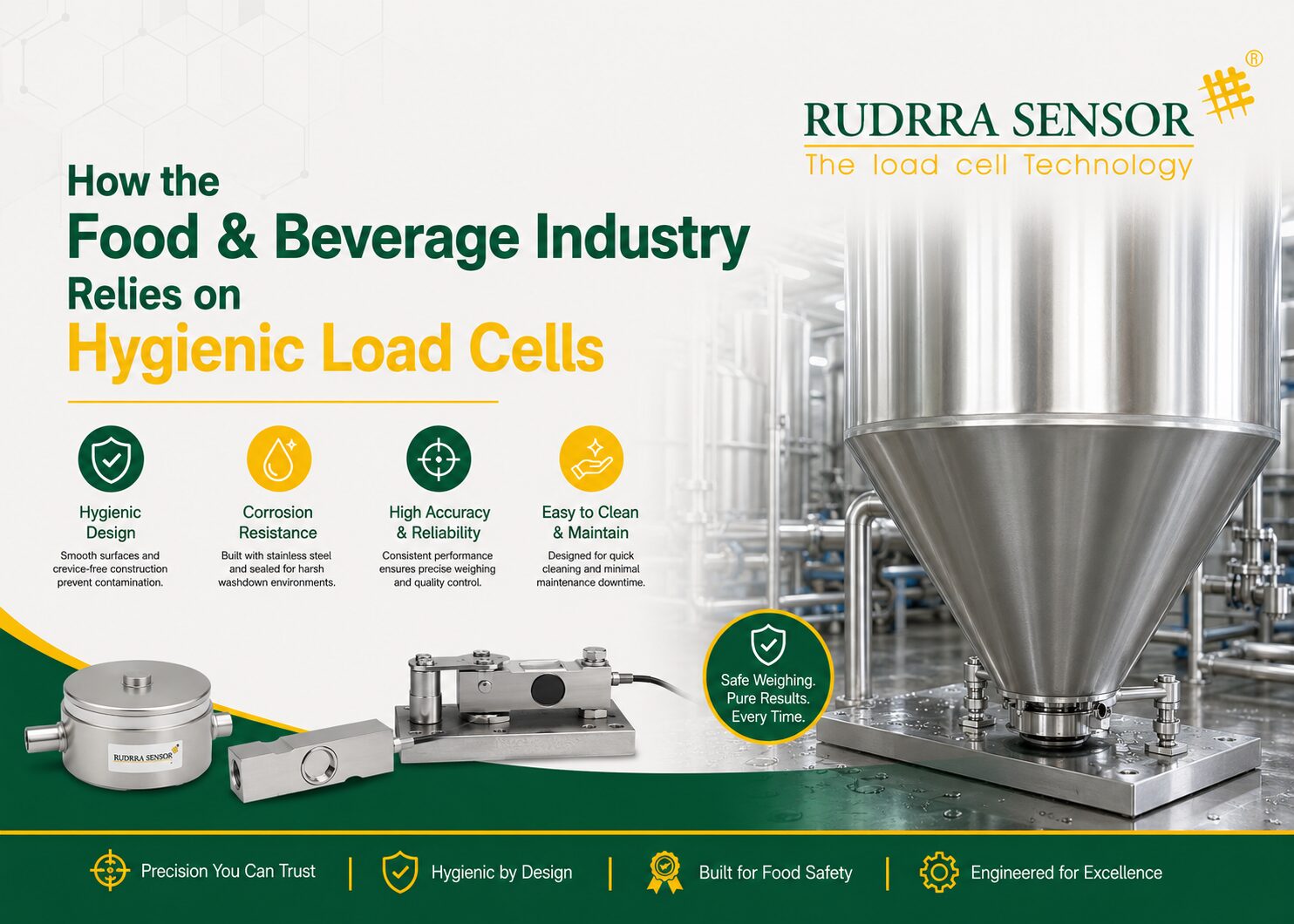
How the Food & Beverage Industry Relies on Hygienic Load Cells
Every loaf of bread on a supermarket shelf, every bottle of packaged water, every biscuit in a tin, every pouch of baby food, and every litre of fruit juice that reaches a consumer’s hands has passed through a food manufacturing process in which precision weighing was performed dozens of times. From the moment raw ingredients arrive at the factory gate — verified by weight against the delivery documentation — to the final check-weight of the sealed retail pack, load cells are the invisible but indispensable technology that ensures the right quantity of the right ingredients goes into every product, every time.
But in the food and beverage industry, precision alone is not enough. A load cell that cannot be thoroughly cleaned, or whose design harbours crevices where food residue can accumulate and bacteria can thrive, is not merely a maintenance problem — it is a food safety hazard. Contamination of food products with microorganisms, cleaning chemicals, or foreign materials can result in product recalls costing crores of rupees, regulatory enforcement action, and — most seriously — illness or death among consumers. This is why the food and beverage industry has developed and enforces specific standards for the hygienic design of all production equipment, including weighing systems and load cells.
Hygienic load cells — designed, manufactured, and certified to meet the food industry’s stringent cleanliness and safety requirements — are the answer to this dual challenge of precision and food safety. Built from food-grade stainless steel, sealed to IP69K against high-pressure hot water wash-down, with smooth, crevice-free surfaces and hygienic cable entries, these load cells are engineered from the ground up for the food and beverage manufacturing environment. They deliver the measurement accuracy that product quality requires, in a form that food safety demands.
This comprehensive guide explores every dimension of hygienic load cell technology as it applies to food and beverage manufacturing. We cover the regulatory and standards framework that defines hygienic design requirements, the specific applications across the food and beverage production spectrum — from ingredients handling and batching through processing, filling, and packaging — the technical specifications that matter in food environments, and the practical guidance on selection, installation, cleaning, and maintenance. By the end of this guide, you will have a thorough understanding of why hygienic load cells are fundamental to food and beverage manufacturing and how to specify the right one for every application.
The Food Industry’s Case for Hygienic Load Cells
Why standard industrial sensors create unacceptable food safety risks
The Scale and Stakes of Food and Beverage Manufacturing
India’s food processing industry is one of the largest in the world — the fifth largest globally, contributing approximately 13% of GDP in the food and agriculture sector and employing over 74 lakh people. The sector processes everything from staple grains and pulses to premium dairy, beverages, snacks, ready meals, confectionery, spices, and baby food. India is also a major exporter of processed food products to markets in the US, Europe, the Middle East, and Southeast Asia — markets that impose the strictest food safety and hygiene standards in the world.
| ₹30L Cr
India food sector market size (2025) |
IP69K
Highest protection for high-pressure wash-down |
Ra 0.8
Max surface roughness for food-contact surfaces (µm) |
100%
Of food products must pass check-weighing |
Why Standard Industrial Load Cells Fail the Food Industry
A standard industrial load cell — designed for general manufacturing, logistics, or process industry applications — is not suitable for use in food and beverage production environments. The reasons are fundamental to the design of these products, not merely incidental:
Material Incompatibility
Most general-purpose industrial load cells are manufactured from alloy steel, nickel-plated or painted to resist corrosion. In food processing environments, these load cells are in contact with water, cleaning chemicals, food acids, salt, sugar solutions, and other materials that corrode alloy steel rapidly and completely. Corrosion products contaminate food; corroded load cells fail mechanically and electrically. Even stainless steel load cells manufactured to AISI 304 (the most common grade in general industrial use) may corrode in environments with repeated exposure to chloride-containing cleaning agents or salt-containing food products. Only AISI 316L stainless steel — with its higher molybdenum content providing superior chloride resistance — provides adequate corrosion protection in the most demanding food processing environments.
Inadequate Ingress Protection
Food processing areas are wet environments. Product splashes, condensation, steam, and daily high-pressure wash-down with hot water and detergent are routine. A standard industrial load cell rated IP65 — dust-tight and protected against directed water jets — is not adequate for this environment. IP65 sealing will not withstand the sustained pressure of a high-pressure wash-down hose directed at the load cell housing, allowing water and cleaning chemicals to enter the load cell body, corrode the strain gauges and bonding, and destroy the calibration or the sensor entirely.
Hygienic Design Standards
EHEDG, 3-A, IP69K, FDA, and FSSAI requirements explained
The Global Framework of Food Equipment Hygiene Standards
The design of equipment for food and beverage manufacturing is governed by a global framework of hygiene standards, certification schemes, and regulatory requirements that collectively define what it means for equipment to be hygienically acceptable for use in food contact or food proximity environments. For load cells, the most relevant of these are:
EHEDG — European Hygienic Engineering and Design Group
EHEDG is the leading international body for hygienic engineering and design in the food and beverage industry. EHEDG issues detailed guidelines covering the hygienic design of equipment, materials, and installations, and operates a certification scheme under which equipment can be tested and certified to meet EHEDG criteria. EHEDG certification of a load cell is the strongest commercially available assurance of its hygienic design quality. The EHEDG guidelines most relevant to load cells include EL Class I (for equipment in direct contact with food) and Class II (for equipment that may be in indirect contact or in food proximity).
Key EHEDG hygienic design criteria for load cells include: all food-contact surfaces must be smooth (Ra ≤ 0.8 µm), easily cleanable, and free of crevices, dead ends, and sharp angles; materials must be non-toxic, non-absorbent, and resistant to the food products, cleaning agents, and disinfectants used in the process; seals must be resistant to the same agents and must not harbour bacteria; and the overall design must enable effective cleaning and inspection without the need for disassembly.
3-A Sanitary Standards
3-A Sanitary Standards, developed in the USA, are widely recognised internationally and are particularly important for dairy and beverage processing equipment. 3-A standards define hygienic design requirements for specific equipment types, and 3-A authorised load cells carry a symbol indicating compliance. While EHEDG is more commonly referenced in Europe and the global export market, 3-A standards are the primary reference for food equipment sold into the US market and for dairy applications globally.
IP69K — High-Pressure Steam Cleaning Compatibility
The IP (Ingress Protection) rating system is defined by IEC standard 60529 and rates the protection of electrical enclosures against solid particle and water ingress. For food and beverage applications, the most relevant ratings are:
- IP67: complete dust exclusion, protected against immersion in water up to 1 metre for 30 minutes — suitable for light wash-down and occasional immersion
- IP68: complete dust exclusion, protected against prolonged immersion beyond 1 metre — suitable for continuous wet environments and more aggressive wash-down
- IP69K: complete dust exclusion, protected against high-pressure, high-temperature water jets (80 bar, 80°C, 14-16 litres/minute at 10-15 cm distance, from all angles) — the mandatory standard for food processing equipment cleaned with high-pressure hot water washers
IP69K is the minimum acceptable standard for any load cell installed in a food or beverage processing area that is subject to high-pressure wash-down. Food processing areas are routinely cleaned once or twice daily using high-pressure hot water lances and foam cleaning systems. An IP67 or IP68 load cell will not withstand this treatment — IP69K certification means the load cell has been physically tested against the standardised high-pressure, high-temperature test and has passed. This is not a theoretical rating — it is a tested and certified performance level.
FDA Regulations and FSMA
In the United States, the Food Safety Modernization Act (FSMA) — and the underlying FDA regulations in 21 CFR Parts 110 and 117 — establish requirements for equipment design, construction, and maintenance in food manufacturing facilities. Equipment must be designed so that it can be adequately cleaned and maintained; exposed surfaces must be non-toxic, non-absorbent, and resistant to food, cleaning agents, and sanitising agents. Load cells installed in FDA-regulated food facilities must meet these requirements as a condition of regulatory compliance.
FSSAI Regulations in India
In India, the Food Safety and Standards Authority of India (FSSAI) is the regulatory authority for food safety and standards. The Food Safety and Standards (Licensing and Registration of Food Business) Regulations require that food business premises and equipment be maintained in good condition, clean, and designed to prevent contamination. FSSAI also references international standards including Codex Alimentarius for equipment hygiene. Food manufacturers targeting export to regulated markets (USA, EU, UK) must additionally comply with those markets’ own regulations, which means EHEDG and IP69K-compliant load cells are increasingly the default standard for export-oriented Indian food manufacturers.
EHEDG vs 3-A vs IP69K — What You Need to Know
EHEDG certification assures the overall hygienic design of the load cell as a system — materials, surfaces, geometry, and cleanability. 3-A Sanitary Standards provide similar assurance specifically for dairy and US market applications. IP69K is a narrower but essential certification: it tells you the load cell’s sealing will withstand high-pressure, high-temperature wash-down. For export-oriented food manufacturers, EHEDG certification + IP69K is the combination that satisfies the most demanding buyer requirements. For domestic Indian production, IP67 or IP68 with 316L stainless steel is the minimum acceptable standard; IP69K is strongly recommended for any area subject to high-pressure cleaning.
Materials, Surface Finishes, and Construction
What makes a load cell genuinely hygienic at a materials and engineering level
Stainless Steel Grades for Food-Contact Load Cells
The spring element, housing, and all external surfaces of a hygienic load cell must be manufactured from a material that is non-toxic, non-corrosive in the food processing environment, non-absorbent, smooth, and durable. Stainless steel is the universal choice, but not all stainless steel grades are equivalent — the grade matters significantly in food applications.
| Stainless Steel Grade | Composition | Food Industry Suitability | Typical Applications |
| AISI 304 (1.4301) | 18% Cr, 8% Ni | Suitable for most food environments; may corrode with repeated chloride exposure (cleaning agents, salt solutions) | Dry food processing areas, non-contact weighing structures |
| AISI 316 (1.4401) | 16% Cr, 10% Ni, 2% Mo | Good chloride resistance; suitable for most wet food and beverage applications | Wet food processing, beverage manufacturing, mild cleaning agents |
| AISI 316L (1.4404) | 16% Cr, 10% Ni, 2% Mo, low carbon | Best choice for food: superior chloride resistance, weld corrosion resistance, and longevity under repeated cleaning | All food-contact and food-proximity load cells; dairy, beverage, seafood, meat processing |
| AISI 904L / Duplex | High Ni/Mo alloy or duplex | Exceptional corrosion resistance for extreme environments (high acid, seawater) | Seafood processing, high-acid beverage, very aggressive cleaning regimes |
AISI 316L is the standard specification for food-grade hygienic load cells. The ‘L’ designation (low carbon) is specifically important for welded applications: standard 316 can suffer sensitisation (chromium carbide precipitation at grain boundaries) during welding, which reduces corrosion resistance in the heat-affected zone. 316L’s lower carbon content prevents this, ensuring that welded seams — which are present in the construction of hygienic load cell housings — maintain their full corrosion resistance.
Surface Finish Requirements
Surface roughness is one of the most critical hygienic design parameters. Rough surfaces provide microscopic crevices in which bacteria attach, multiply, and form biofilms — organised communities of bacteria embedded in a protective polysaccharide matrix that is highly resistant to cleaning and disinfection. Research in food microbiology has established that a surface roughness of Ra ≤ 0.8 µm (often expressed as 32 microinch Ra in US specifications) is the threshold below which bacterial adhesion is significantly reduced and effective cleaning is achievable. For the most critical applications (direct food contact in dairy and aseptic processing), Ra ≤ 0.4 µm is specified.
Food-grade hygienic load cells should be specified with documented surface finish values for all food-contact and food-proximity surfaces. The surface finish is achieved through mechanical polishing (linishing, buffing) and sometimes electropolishing — an electrochemical process that selectively removes the peaks of surface roughness, producing very smooth, bright, chromium-enriched surfaces with excellent corrosion resistance and cleanability. Electropolished surfaces also have a lower tendency to accumulate product deposits and are easier to visually inspect for cleanliness.
Hygienic Design Geometry
Beyond material and surface finish, the geometry of the load cell — its shape, the presence or absence of crevices and dead spaces, the design of its joints and cable entry — is fundamental to hygienic performance. EHEDG guidelines specify minimum internal corner radii, prohibit external threads in food contact zones, require self-draining geometry (no horizontal surfaces that can hold pools of cleaning water), and mandate that all joints be fully welded and ground smooth rather than mechanically fastened.
- All internal and external corners must have a minimum radius of 3 mm to prevent product accumulation and enable cleaning solution access
- External threads are prohibited in food contact zones — threaded connections provide deep crevices that cannot be cleaned and must be replaced by crevice-free alternatives such as clamp connections
- Cable entries must be sealed without exposed threads — typically using a moulded, overmoulded, or compression-sealed entry that provides IP69K sealing without creating crevices
- Horizontal flat surfaces that can hold pooling water are to be minimised or angled for self-drainage — standing water is an incubator for microbial growth
- All seams, welds, and joints in the load cell housing must be fully welded and ground flush, with no visible seams, gaps, or overlapping surfaces
Hygienic Seals and Cable Materials
The seals used in hygienic load cells — O-rings, gaskets, and potting compounds — must be manufactured from food-grade elastomers listed in FDA 21 CFR 177.2600 and EU Regulation 10/2011, such as EPDM (ethylene propylene diene monomer) or silicone. These materials must be resistant to the food products, cleaning agents, and sanitisers they will contact, and must not swell, degrade, or leach chemicals into food products over the load cell’s service life.
The load cell cable — which exits the load cell body and runs to the signal conditioner or junction box — is a potential ingress pathway for moisture and cleaning chemicals if not properly sealed. Hygienic load cells use overmoulded or specially sealed cable exit designs that provide IP69K protection without external threads. The cable jacket material must be food-grade (typically PUR — polyurethane — or silicone), resistant to the cleaning agents used, and resistant to mechanical damage from food handling equipment and cleaning tools.
Ingredients Receiving and Storage
Controlling what comes in — from delivery verification to silo inventory
Raw Material Receiving and Weight Verification
The food manufacturing process begins at the goods-in dock, where raw materials — flour, sugar, vegetable oils, spices, dairy ingredients, fruit purees, flavours, packaging materials — arrive from suppliers. The accuracy of incoming weight verification is important for two reasons: commercial accuracy (ensuring the plant pays for exactly what it receives, not more or less) and batch integrity (ensuring that the quantity of each ingredient available for production matches what the production planning system expects).
Platform scales and floor scales at food factory goods-in areas must be food-grade when they are in areas where food packaging may be breached or where ingredients are exposed. Even when the primary contact surface is the pallet or bag rather than the load cell directly, splashes, spillage, and condensation mean that load cells under platform scales in food receiving areas should be of stainless steel, IP67+ construction to withstand the daily cleaning of these areas and the inevitable exposure to food ingredients.
For bulk liquid deliveries — milk, vegetable oils, liquid sugar, liquid flavours — the tanker is weighed before and after delivery on a dedicated weighbridge or flow meter system. In many plants, tank-mounted load cells on the receiving tanks provide an alternative or additional check: the increase in tank weight when the liquid is transferred from the tanker is independently measured and compared against the delivery documentation. This cross-check is particularly important in dairy manufacturing, where milk delivery accuracy directly affects the economics of the plant.
Silo and Bulk Storage Weighing
Flour, sugar, salt, starch, cocoa powder, protein concentrates, and many other dry food ingredients are stored in bulk silos outside the production building, with pneumatic conveying systems transporting material to production hoppers as needed. Liquid ingredients — oils, liquid sugar, fruit concentrates, emulsifiers — are stored in large stainless steel tanks.
Load cells beneath these silos and tanks provide real-time inventory data that feeds the plant’s ERP or production management system. Without continuous, accurate inventory data, production planning relies on manual level gauges or periodic manual measurements — both of which are inaccurate and labour-intensive. Load cell-based inventory systems provide automatic alerts when stocks fall below reorder thresholds, preventing the costly disruption of running out of a key ingredient mid-production.
The load cells used for silo and outdoor bulk tank weighing in food plants face specific environmental challenges: outdoor temperature variation (from near-freezing in winter to 45°C or more in Indian summer), rain and dust exposure, and the vibration and airborne dust from pneumatic conveying systems. Outdoor food silo load cells should be IP67 or IP68 rated, made of AISI 316L, and mounted with appropriate protection from direct solar radiation and rain ingress into the mounting hardware. Mounting assemblies — cup-and-ball or rocker pin systems — must also be of stainless steel construction to prevent galvanic corrosion at the steel-to-stainless interface.
Batching, Mixing, and Blending
The heart of food manufacturing — where load cell accuracy translates directly to product consistency
Why Batching Accuracy Defines Food Quality
The formulation of a food product — the recipe that specifies the type and quantity of every ingredient — is the intellectual foundation of the product’s identity. The recipe defines the flavour, texture, colour, shelf life, nutritional content, and cost of the product. A food manufacturer that cannot reproduce its recipe accurately, batch after batch, will produce product that is inconsistent — varying in taste, appearance, and nutritional content in ways that consumers notice and that quality auditors measure. Load cell-based batching systems are the technology that makes recipe accuracy reproducible at industrial scale.
Gain-in-Weight and Loss-in-Weight Batching in Food Manufacturing
Food manufacturing batching systems use two fundamental approaches to ingredient addition control, and both rely on load cells:
In gain-in-weight (GIW) batching, the mixing vessel or weigh hopper sits on load cells. Ingredients are added sequentially — each one dispensed until the cumulative weight reaches the target for that ingredient step. The load cells measure the increasing total weight, and the batch controller closes the ingredient feed when the target is reached. GIW systems are well-suited to large-scale food batching where multiple ingredients are added into a single vessel — industrial mixers for bread dough, confectionery masses, sauces, and ready meal fillings.
In loss-in-weight (LIW) batching, each ingredient supply hopper sits on load cells. As ingredient is dispensed, the hopper weight decreases. The weight loss equals the dispensed quantity. LIW systems are preferred for continuous processes (such as continuous mixing or extrusion) where a consistent mass flow rate of each ingredient is required, and for high-accuracy dispensing of minor ingredients (flavours, colours, preservatives, vitamins) where the quantities are small and the accuracy requirements are tight.
Spice and Flavour Dispensing
The dispensing of minor ingredients — spices, flavours, colourings, preservatives, and functional ingredients such as vitamins and minerals — is one of the most accuracy-critical weighing operations in food manufacturing. These ingredients are typically added in very small quantities (measured in grams or tens of grams, not kilograms) but have a disproportionate impact on the product’s sensory characteristics and nutritional profile. Under-dosing a flavour makes the product taste different from the established standard; over-dosing a preservative may exceed regulatory maximum permitted levels.
Hygienic load cells in minor ingredient dispensing systems must offer high resolution — typically 0.1 gram or better — combined with IP69K protection (these dispensing areas are cleaned frequently and thoroughly) and stainless steel 316L construction. The load cell must also have low creep, because the dispensing of a small quantity from a large supply hopper means the load cell is operating at the very bottom of its measurement range, where creep and thermal drift are most significant relative to the measurement value.
Meat, Fish, and Poultry Batching
In the meat, fish, and poultry processing industry, batching of product for mincing, marinating, seasoning, and portioning is a continuous high-volume operation carried out in environments that are inherently wet, cold, and subject to aggressive cleaning with hot water and chlorine-based disinfectants. The load cells used in these environments are among the most demanding hygiene applications in the entire food industry.
Batching systems in meat processing plants use stainless steel weigh hoppers mounted on hygienic compression load cells. Meat and fish are added to the hopper — sometimes by hand, sometimes by conveyor or pump — and the weight is monitored to control the batch size for the downstream process. The speed of operation (meat processing lines run at high throughput) and the aggressive physical and chemical environment combine to make IP69K and EHEDG certification non-negotiable requirements for load cells in these applications.
HACCP and Load Cell Weighing
Hazard Analysis and Critical Control Point (HACCP) is the risk management framework used in food manufacturing to identify, assess, and control food safety hazards. In many food manufacturing processes, ingredient addition weights are designated as Critical Control Points (CCPs) — points in the process where a measurement is taken, compared against a critical limit, and where a corrective action is taken if the limit is exceeded. Load cells at CCP weight checks must be calibrated, maintained, and documented with the rigour required for CCP instrumentation. Their calibration records are part of the HACCP documentation that is reviewed during regulatory inspections.
Food Processing — Cooking, Dosing, and Flow Control
Load cells in the most demanding areas of the production floor
Continuous Process Weighing and Flow Control
Many food manufacturing processes are continuous rather than batch — a constant stream of product flows through the process without interruption for batch changeovers. Bakery plants, dairy processing lines, edible oil refineries, sugar production lines, and breakfast cereal plants all operate continuously, and the control of ingredient flow rates in these processes requires continuous, real-time mass flow measurement. Load cells in loss-in-weight feeders, conveyor belt scales, and in-line flow measurement systems provide this data.
In a continuous biscuit manufacturing plant, for example, flour, fat, sugar, and minor ingredients must be fed to the mixer at precisely controlled mass flow rates to produce a consistent dough. Loss-in-weight feeders — hopper scales on load cells with screw or belt feeders — measure and control the delivery of each ingredient at the target mass flow rate. If the measured flow rate deviates from the target (because the powder’s bulk density has changed, for example), the feeder’s speed is automatically adjusted to compensate. This closed-loop flow control is only possible because the load cell provides a real-time mass signal — not a volume or level signal, which would be affected by density changes.
Cooking Vessel and Kettle Weighing
In the manufacture of jams, sauces, soups, ready meals, and confectionery, large steam-jacketed cooking kettles or open cooking pans are used. The quantity of product in the kettle at any point in the cooking cycle is important for controlling the concentration of the product (which determines its viscosity, texture, and shelf life), for yield calculation, and for recipe compliance. Load cells mounted beneath the cooking kettle — or S type load cells in a tension installation supporting a suspended kettle — provide the weight data that allows the batch controller to track the progress of the cooking and evaporation process.
In jam and preserve manufacturing, for example, the cook vessel load cells monitor the weight of the boiling mass continuously. As water evaporates during boiling, the weight of the batch decreases. The batch controller tracks this weight reduction and can calculate the degree of concentration — expressed as a target weight of final product — without needing to measure Brix (sugar concentration) directly. When the cook weight reaches the target (corresponding to the required final product concentration), the cook is ended automatically. This weight-based cooking endpoint control produces more consistent product than time-based or temperature-based endpoint determination alone.
Extrusion and Continuous Blending
Food extrusion — used to manufacture pasta, breakfast cereals, snacks, pet food, and many other products — is a continuous process in which a mixture of ingredients is conveyed and cooked under pressure through a shaped die. The control of ingredient feed rates to the extruder directly determines the composition and texture of the extrudate. Loss-in-weight feeders on load cells control the delivery of each ingredient component — flour, starch, protein, flavours, water — at the target mass flow rate, maintaining recipe accuracy across hours of continuous production.
Extruder output weight monitoring — weighing the extrudate on a belt conveyor scale downstream of the die — provides real-time throughput data and enables calculation of the system’s mass balance. If the measured output rate diverges from the expected value based on the input feed rates, this indicates a process problem (die blockage, moisture change, ingredient bridging) that requires attention.
Filling and Packaging
Where precision and food safety converge at the retail interface
The Commercial and Regulatory Importance of Fill Weight
Fill weight accuracy in food and beverage packaging is simultaneously a legal requirement, a commercial imperative, and a consumer trust issue. In India, the Legal Metrology (Packaged Commodities) Rules require that packaged food products meet declared quantity requirements — both individually and as a statistical average across a batch. In export markets, the EU Average Quantity Regulation (76/211/EEC), the UK weights and measures regulations, and US NIST Handbook 133 impose similar or stricter requirements.
The commercial dimension of fill weight accuracy is equally compelling. Consider a manufacturer filling 500g bags of rice at a rate of 1,000 bags per hour. If the average fill is 505 grams instead of exactly 500 grams — only 1% over — the 5-gram giveaway per bag amounts to 5 kg per hour, 120 kg per shift, and over 43 tonnes per year of rice given away free. At a market price of ₹50 per kilogram, this represents over ₹21 lakh in annual giveaway from a single filling line. Hygienic load cells in filling machines directly recover this giveaway by enabling precise, real-time fill weight control.
Net-Weight Filling Systems
Net-weight filling is the most accurate approach to fill weight control. The empty container — whether a bag, bottle, jar, tub, sachet, or carton — is placed on a hygienic load cell platform. The system records the tare weight of the empty container, and then product is dispensed — by pump, auger, volumetric filler, gravity, or piston — until the target net weight of product has been added. Because the net weight is measured directly, variations in container weight (which occur in glass bottles, plastic tubs, and flexible sachets) do not affect the net content accuracy.
For high-speed filling lines — bottled water, carbonated beverages, liquid dairy products — filling rates of hundreds of containers per minute make individual net-weight filling impractical. Instead, a combination of accurate volumetric filling and downstream check-weighing is used, with the check-weigher’s statistical output feeding back to the filler to trim the fill volume over time.
Gravimetric Filling for Liquids and Pastes
Gravimetric filling — filling by weight rather than by volume — is particularly valuable for products whose density varies: viscous sauces, high-Brix fruit concentrates, honey, jam, pastes, and oils all vary in density with temperature and composition. Volumetric fillers, which dispense a fixed volume regardless of density, will produce variable net weights when the product density changes. Gravimetric fillers, controlled by load cells, dispense a fixed weight regardless of density variation — making them the preferred choice for premium products where fill consistency is a quality differentiator.
Multihead Weighers in Snack and Fresh Food Packaging
The multihead weigher is one of the most remarkable and commercially important food packaging machines in use today — and it is almost entirely defined by its load cell technology. A multihead weigher consists of a central feed cone that distributes product (crisps, nuts, frozen vegetables, fresh produce, confectionery, pet treats, seafood) across a radial array of 14, 16, 24, or 32 weigh hoppers, each mounted on a precision load cell. The machine’s control computer simultaneously measures the weight of product in every hopper and calculates — thousands of times per second — the combination of hoppers whose combined weight comes closest to the target pack weight, without exceeding a pre-set overweight limit.
This combinatorial weighing approach allows multihead weighers to achieve target weights with an accuracy of ±0.5 to ±1 gram at speeds of 100 to 200 packs per minute — a performance that no other filling technology can approach for irregular, variable-unit-weight products. The load cells in multihead weighers are typically high-frequency, high-resolution strain gauge cells — each one individually calibrated, with a resolution of 0.1 gram or better — combined with sophisticated digital filtering to reject vibration noise from the high-speed hopper mechanisms.
Because multihead weighers handle food products directly, their load cells and the hopper structures they support must meet the strictest hygienic design requirements. All product-contact surfaces are polished stainless steel; the load cells themselves are sealed to IP65 or IP67 as a minimum (most modern multihead weighers are designed for full wet clean-down); and the hopper geometry is designed for rapid product changeover and thorough manual cleaning.
Check-Weighing and Quality Control
100% in-line weight verification for food safety and regulatory compliance
The Role of the Check-Weigher in Food Manufacturing
The inline check-weigher is the final, definitive quality gate in a food packaging line. Positioned after the filler and sealer — but before the case packer, stretch wrapper, or dispatch area — the check-weigher weighs every single pack as it travels along a conveyor at production speed, compares the weight against the acceptance limits, and automatically diverts any pack outside those limits to a reject chute. The good packs continue to downstream packing; the rejected packs are either reworked (where permitted) or destroyed.
The check-weigher serves multiple purposes simultaneously in the food industry:
- Legal compliance: ensures that no underweight packs are shipped to market, in compliance with Legal Metrology regulations
- Consumer protection: ensures consumers receive the quantity they paid for
- Commercial accuracy: minimises overfill (product giveaway) by providing statistical data to trim the filler’s set-point
- Product integrity: detects missing components in multi-component packs — a missing sachet, a missing divider, a missing sauce pouch
- Process monitoring: statistical analysis of weight distribution provides real-time indicators of filler performance and product consistency
How Food-Grade Check-Weighers Use Load Cells
The heart of a food check-weigher is a dynamic weigh cell — a specialised high-speed load cell designed for the specific challenge of accurately measuring a moving pack in the fraction of a second it spends on the weigh belt. This is a fundamentally different measurement challenge from static weighing: the pack arrives on the weigh belt at line speed, settles briefly under gravity, and departs — all within a timeframe of 50 to 500 milliseconds depending on the pack weight, line speed, and belt length.
The dynamic weigh cell must have a very high natural frequency — typically above 500 Hz — so that it responds to the transient loading without ringing (oscillating) beyond the measurement window. It must have extremely low hysteresis — so that the zero returns instantly when the pack leaves — allowing the next pack to be measured without interference from the previous one. And it must have the sensitivity to resolve weight differences of 1 to 2 grams on a 500-gram pack at speeds of 100 to 200 packs per minute.
Modern food check-weighers also incorporate temperature compensation electronics, digital signal processing with adaptive filtering that adjusts to the vibration frequency of the production environment, and predictive software that uses the force profile of the pack’s arrival on the weigh belt to extrapolate the static weight before the dynamic signal has fully settled — allowing faster belt speeds than would otherwise be achievable.
Statistical Weight Control and Legal Metrology
Beyond the simple accept/reject function, food check-weighers equipped with hygienic load cells provide real-time statistical process control (SPC) data that is increasingly required by both retailers and regulators. The key statistical parameters monitored are:
- Mean fill weight — the average of all pack weights; should be close to but not below the target fill weight
- Standard deviation — a measure of fill weight variability; lower standard deviation means more consistent filling and less giveaway needed to keep all packs above the minimum
- Cp and Cpk — process capability indices that measure how well the fill process is staying within specification limits
- Percentage underweight — the proportion of packs below the minimum declared quantity; should be zero for regulatory compliance
- Trend charts — time-series plots of mean fill weight that reveal filler drift before it causes rejects
This data is transmitted electronically from the check-weigher to the plant’s quality management system, providing real-time visibility of packaging line performance to production managers and quality teams. For export-oriented food manufacturers, the ability to produce documented proof of fill accuracy — with electronic records of every pack weighed — is increasingly a requirement of major retailer and customer audits.
Beverages — Brewing, Dairy, and Soft Drinks
Hygienic load cells in the most liquid, most demanding production environments
Dairy Processing — Milk, Cheese, Yoghurt, and Powder
Dairy processing is one of the most demanding food manufacturing environments for load cell technology. The combination of high water activity (milk is approximately 87% water), high protein and fat content (both highly supportive of microbial growth), high cleaning frequency (twice-daily CIP as a minimum), and the use of aggressive alkaline and acid CIP cleaning agents creates an environment where substandard load cells will fail quickly and food-safe ones are essential.
Load cells in dairy plants serve multiple critical functions:
- Milk reception and silo weighing: raw milk received from farmers is weighed on delivery tankers or in reception silos to determine the quantity received for payment purposes — a legal-for-trade measurement requiring OIML C3 certified load cells
- Standardisation vessel weighing: fat and protein content standardisation involves adding cream or skim milk to whole milk in controlled quantities; load cells on the standardisation vessels provide real-time weight monitoring to control these additions
- Cheese and yoghurt batching: ingredient additions to cheese and yoghurt vats — milk, cream, starter cultures, rennet, salt — are controlled by load cells on the vat weigh frames
- Powder and filling plant weighing: dairy powder filling, portion packing (butter, cheese portions, yoghurt cups), and liquid filling (UHT milk, cream) all use load cells for fill weight control and check-weighing
All load cells in dairy CIP areas must be IP69K rated and constructed of AISI 316L — the caustic soda (NaOH) solutions used in dairy CIP are highly corrosive to lower-grade stainless steel and will destroy the cable seals of insufficiently rated load cells within months.
Brewing and Beverage Manufacturing
The brewing and beverage manufacturing industries — covering beer, spirits, soft drinks, fruit juices, energy drinks, and bottled water — use load cells extensively for ingredient addition control, vessel inventory management, and fill weight verification.
In brewing, the accuracy of grist (malt) addition to the mash tun, hop addition to the kettle, and adjunct additions (sugar, unmalted grain) directly affects the fermentable extract, final alcohol content, and flavour profile of the beer. Loss-in-weight feeders with load cells control the grist feed rate to the mash tun in modern automated brew houses. Load cells on the kettle monitor the boil-off volume indirectly through the weight reduction during boiling — a weight-based evaporation monitoring approach that eliminates the need for dipstick measurements in a boiling kettle.
In soft drinks manufacturing, the concentrate-to-water ratio — the primary determinant of the drink’s flavour and sweetness — is controlled by load cells in the ratio blending system. Accurate dosing of concentrate, sugar syrup, flavours, and carbonated water at the target ratios is critical for product consistency. Load cells measuring the weight of each component added to the blend vessel, or flow meters with load cell-based density compensation, provide the measurement accuracy needed for commercial soft drinks production.
Bottling and canning lines in beverage manufacturing are among the highest-speed packaging operations in any industry, with line speeds of up to 100,000 containers per hour for major brands. At these speeds, inline check-weighing and fill level verification use specialised high-speed measurement systems — including load cells in dynamic check-weighers, and X-ray or laser-based fill level inspection — to verify every container before labelling and dispatch.
Edible Oil and Fat Processing
Edible oil refining and packaging — covering oils from groundnut, sunflower, sesame, palm, soybean, and mustard, as well as ghee, vanaspati, and specialty fats — requires precise weighing at multiple points: crude oil reception by tank weighing, refining vessel batch additions (bleaching earth, neutralising agents), hydrogenation reactor control, and filling machine weight control for retail packaging.
Edible oil environments present specific material compatibility challenges: hot oil at temperatures up to 180°C during processing, solvent traces in some deodorising systems, and phosphoric acid and sodium hydroxide solutions in the refining process. Load cells in oil refining vessels must withstand these temperatures and chemical exposures, with sealing materials compatible with hot oils and process chemicals.
CIP, Wash-Down, and Sterilisation Compatibility
How hygienic load cells survive and perform through the food industry cleaning regime
The Food Industry Cleaning Regime — What Load Cells Must Withstand
Food processing equipment is cleaned far more frequently and far more aggressively than equipment in general manufacturing. Depending on the product type and production schedule, food processing areas may be cleaned once or twice daily using a combination of:
- Foam cleaning: alkaline (caustic soda, concentration 1-3%, temperature 40-60°C) or neutral foam applied to all surfaces and allowed to dwell before rinsing
- High-pressure rinsing: hot water at 60-80°C applied at pressures of 40-150 bar through a high-pressure lance or rotating nozzle system
- Sanitising: chlorine-based (sodium hypochlorite, 100-300 ppm), peracetic acid (0.1-0.3%), or quaternary ammonium compound sanitisers applied after cleaning
- Steam cleaning: live steam at 100°C or above, used for disinfection of specific areas or equipment
Load cells in food processing areas must withstand this cleaning regime multiple times every working day, every working week, for years of service. An IP69K-rated load cell has been tested against a simulated high-pressure wash with water at 80°C, 80 bar pressure, at 14-16 litres per minute, from all angles at a distance of 10-15 cm — and has passed with no water ingress. This test is considerably more severe than the cleaning that most food plants actually apply, providing a genuine safety margin.
CIP Compatibility for Tank and Vessel Load Cells
Clean-in-Place (CIP) systems clean the interior of food processing tanks, vessels, and pipework without disassembly, using recirculating cleaning solutions. For load cells mounted externally on tank supports or weigh frames, CIP itself does not directly affect the load cell — but the external cleaning of the CIP installation does. The tank exterior, the weigh frame structure, and the load cells are typically cleaned simultaneously with the rest of the production area, using the high-pressure, high-temperature, chemical-laden cleaning process described above.
For load cells in areas where the CIP return lines pass close to the mounting structure — or where product overflow or CIP spillage may wet the load cell body — IP69K sealing and 316L construction are essential. In sterilising-in-place (SIP) applications, where the vessel and load cells are exposed to steam at 121-134°C, the load cell must be specified for the relevant temperature range and its seals must be steam-compatible.
Inspection and Maintenance After Cleaning
After each cleaning cycle, a visual inspection of load cell installations should verify that seals are intact, cable entries are undamaged, and the load cell body shows no signs of corrosion, cracking, or mechanical damage. Any anomaly must be investigated and resolved before returning the installation to production use. The periodic checks described here are a fundamental part of HACCP-based food safety management in any facility using load cell-based weighing.
Cable runs from load cells in food processing areas deserve particular attention. Cables should be routed in stainless steel conduit or cable trays that can themselves be cleaned, with no horizontal runs where cleaning water can pool. Cable entry to junction boxes should be sealed with food-grade glands, and junction box locations should be in areas accessible for inspection but out of the direct path of cleaning equipment.
Selecting the Right Hygienic Load Cell
A practical decision framework for food and beverage applications
The Food Industry Load Cell Selection Framework
Selecting a hygienic load cell for a food or beverage manufacturing application requires working through a set of selection criteria in a structured sequence. The following framework covers the critical decisions:
| Selection Parameter | Food Industry Considerations | Recommendation |
| Load Cell Type | Application determines type: tension/hanging hoppers (S type); vessel support (compression); platform scales (shear beam/single point); tablet weigher (high-speed specialised) | Match type to mechanical installation; consult application guide |
| Rated Capacity | Must cover maximum load with 20-30% margin; account for vessel tare, product weight, and agitator/mixer inertia loads | Select 1.25-1.5× maximum expected gross load |
| Accuracy Class (OIML) | C2 for process control and monitoring; C3 for commercial/legal-for-trade applications; higher for check-weighers and QC | C3 as standard for food production; C2 acceptable for inventory monitoring only |
| Material | AISI 316L for all wet food processing, dairy, beverage, meat, seafood; AISI 304 acceptable for dry food areas only | Specify 316L as default for all food & beverage applications |
| IP Rating | IP67 minimum for incidental wet exposure; IP68 for continuous wet environments; IP69K mandatory for all areas subject to high-pressure hot wash-down | Specify IP69K for all food production areas — future-proofing against cleaning regime changes |
| Surface Finish | Ra ≤ 0.8 µm for food-contact and food-proximity surfaces; Ra ≤ 0.4 µm for direct food contact and dairy/aseptic applications | Request surface finish certificate; electropolished preferred |
| Hygienic Design Certification | EHEDG certified for highest assurance of hygienic design; 3-A for dairy and US market applications | EHEDG + IP69K is the gold standard for export-oriented manufacturers |
| Cable and Entry | Food-grade PUR or silicone cable jacket; sealed cable entry without external threads; IP69K-rated; cable grip strain relief | Specify by name in URS; reject load cells with threaded cable glands in exposed locations |
| Seal Material | EPDM or silicone seals listed in FDA 21 CFR and EU Reg 10/2011; resistant to cleaning agents and sanitisers used on site | Confirm seal material suitability against site cleaning chemicals before purchase |
| Operating Temperature | Standard -10 to +70°C for most food applications; extended range for steam CIP (up to 135°C), freezer/cold store applications (down to -40°C) | Check that compensated temperature range covers actual operating conditions |
| Compliance Documentation | EN 10204 3.1 material certificate; IP test certificate; EHEDG or 3-A certification; OIML certificate; calibration certificate | Request full documentation pack before purchase |
| Supplier Support | Supplier should understand food industry requirements; provide application engineering; support calibration and qualification | Assess at quotation stage; request food industry references |
Installation Best Practices
Getting the most from hygienic load cells through correct installation
Hygienic Installation Principles
Even the best hygienic load cell will underperform — or become a food safety liability — if it is poorly installed. Hygienic installation principles for food and beverage load cell systems include:
- Use only food-grade mounting hardware — stainless steel cup-and-ball assemblies, mounting feet, and load cell brackets. Galvanic corrosion at the interface between stainless load cells and mild steel mounting hardware can generate corrosion products that contaminate adjacent food contact areas
- Ensure self-draining geometry at every point in the load cell mounting system — no horizontal surfaces, pockets, or cavities where cleaning water, product, or condensate can collect and stagnate
- Route cables in stainless steel conduit or enclosed cable trays that can be effectively cleaned. Cables lying on the floor or draped over structures are cleaning obstacles and contamination risks
- Install hygienic junction boxes — stainless steel, smooth-surfaced, self-draining, IP67 or IP69K rated — in accessible locations where they can be cleaned and inspected
- Maintain a minimum clearance of 150 mm around the load cell and mounting hardware on all sides to allow cleaning equipment access and visual inspection
- Use flexible connections (hose sections or expansion joints) for all pipework connected to weigh vessels — rigid pipe connections create parallel load paths that cause measurement errors and prevent the vessel from moving freely on its load cells
Commissioning and Calibration at Installation
After installation and before first production use, every hygienic load cell system must be commissioned and calibrated:
- Clean the complete installation — vessel, load cells, mounting hardware, and cabling — using the production cleaning procedure before commissioning. This establishes that the system is cleanable as installed and reveals any cleaning access problems that need to be resolved before regular production begins.
- Allow the system to stabilise mechanically for 24-48 hours before calibration — new installations may exhibit some initial settlement of mounting hardware that affects the zero.
- Perform a full calibration using certified test weights traceable to NABL standards (in India) — apply test weights at 0%, 25%, 50%, 75%, and 100% of the measurement range, and record as-found and as-left readings in a calibration certificate.
- Verify that zero returns correctly after removal of test weights — non-return to zero indicates mechanical binding or an unresolved parallel load path.
- Document the completed installation with photographs of the mounting arrangement, cable routing, and junction box locations — this documentation supports future maintenance and troubleshooting.
Rudrra Sensor’s Hygienic Load Cell Solutions
India’s trusted load cell partner for food and beverage manufacturing
About Rudrra Sensor
Rudrra Sensor has been manufacturing and supplying precision load cells and weighing system components to Indian and global industries since 2002. Our food and beverage product range is specifically designed and manufactured to meet the hygiene requirements of food processing environments — combining measurement accuracy with the food-safe construction quality that the industry demands.
Our Food & Beverage Hygienic Load Cell Range
- Hygienic S Type Load Cells — 316L stainless steel, IP67/IP68, electropolished surfaces; for hanging hopper weighing, batch addition control, and tension measurement; capacities 5 kg to 10,000 kgs
- Hygienic Compression Load Cells — 316L SS, IP67/IP68/IP69K; for tank and vessel support in food and beverage processing vessels; capacities 500 kg to 500,000 kg
- Hygienic Shear Beam Load Cells — 316L SS, IP67/IP69K; for food-grade platform scales, floor scales, and conveyor belt scales; capacities 50 kg to 20,000 kg
- Hygienic Single Point Load Cells — 316L SS and anodised aluminium, IP65/IP67; for food-grade bench scales and small platform scales; capacities 1 kg to 500 kg
- Hygienic Load Cell Mounting Hardware — 316L stainless steel cup-and-ball assemblies, rocker pins, and weigh frame kits designed for self-draining, crevice-free food-safe installations
- Food-Grade Load Cell Amplifiers — IP65 stainless steel enclosure, food-grade signal conditioners for 4-20 mA and digital output; compatible with major food industry PLC and SCADA platforms
- Hygienic Load Indicators — stainless steel panel-mount and field-mount indicators, IP65, with electronic data logging for HACCP record-keeping
Compliance Documentation for Food Industry Customers
- EN 10204 3.1 Material Certificate — confirming AISI 316L chemical composition of spring element and housing
- IP Rating Test Certificate — confirming IP67, IP68, or IP69K tested and certified performance
- Surface Finish Certificate — Ra value measurement report for food-contact surfaces
- Factory Calibration Certificate — traceable to NABL/national standards, with individual accuracy data
- OIML Certificate of Conformity — for C3 accuracy class load cells
- Declaration of Conformity — confirming compliance with applicable directives and standards
- Installation and Maintenance Manual — including recommended cleaning procedures and maintenance schedules for food industry customers
Application Engineering for Food and Beverage Customers
The food and beverage industry’s requirements are specific, and correct specification matters enormously. Our engineering team has experience with food-grade load cell applications across dairy, beverages, bakery, confectionery, spices, meat processing, edible oils, and food packaging. We provide:
- Application consultation: translating your process requirements into the right load cell specification, including IP rating, material grade, surface finish, and capacity
- Hygienic installation design: reviewing your installation drawings for hygienic design compliance and recommending mounting hardware configurations
- Cleaning compatibility review: assessing the compatibility of our load cells with your specific cleaning agents, concentrations, and temperatures
- Calibration support: providing calibration data and recommendations for calibration intervals based on your application criticality and cleaning regime
Frequently Asked Questions (FAQs)
Q1: What is the difference between IP67, IP68, and IP69K, and which do I need for my food plant?
IP67 protects against temporary immersion (up to 1 metre, 30 minutes) — suitable for areas with incidental splash and light wash-down. IP68 protects against prolonged immersion — suitable for continuous wet environments and moderate wash-down. IP69K protects against high-pressure, high-temperature water jets (80°C, 80 bar) from all angles at close range — this is the standard required wherever high-pressure wash-down lances or rotating nozzle cleaners are used, which is the majority of food processing areas. For a new installation in any food production area, specify IP69K as a minimum — it covers all scenarios and provides future-proofing if cleaning procedures are upgraded.
Q2: Is AISI 304 stainless steel acceptable for food-contact load cells, or must I always use 316L?
AISI 304 may be acceptable for dry food processing areas and non-food-contact applications where cleaning agents are mild and chloride exposure is minimal. However, AISI 316L is strongly recommended for all wet food processing areas, dairy, beverage, meat, seafood, and any area cleaned with chlorine-based sanitisers or caustic agents. The 2% molybdenum content of 316L provides significantly better resistance to pitting corrosion from chlorides — and the ‘L’ (low carbon) grade is essential for weld-integrity in hygienic designs. Specifying 316L for all food and beverage load cells is the safest and most cost-effective policy.
Q3: What surface finish should I specify for a load cell used in direct food contact?
For direct food contact applications (load cells that may contact food product or food processing liquids directly), specify Ra ≤ 0.8 µm as a minimum, with Ra ≤ 0.4 µm for dairy, aseptic, and baby food applications. Electropolishing is recommended for the best achievable surface finish and corrosion resistance. Always request a surface finish certificate (a documented measurement of the actual Ra value of the load cell surfaces) from the supplier — do not accept a nominal specification without evidence of testing.
Q4: How often should hygienic load cells be calibrated in a food manufacturing plant?
Calibration frequency should be based on the criticality of the application, the operating environment, and the historical performance of the system. As a general guideline: legal-for-trade applications (goods receipt, dispatch, direct billing) — 6-monthly calibration; HACCP Critical Control Point weighing — 6-monthly or annually depending on the control plan; general production batching and in-process monitoring — annually. Any load cell that has been subjected to overload, mechanical impact, or aggressive cleaning that may have affected its calibration should be recalibrated before returning to production. Calibration should be performed by trained personnel using certified test weights traceable to NABL standards.
Q5: Can hygienic load cells withstand CIP cleaning without damage?
IP69K-rated hygienic load cells are designed and tested to withstand the high-pressure, high-temperature water used in food plant cleaning regimes. For CIP applications where cleaning solutions (caustic soda at 60-80°C, nitric acid, peracetic acid) may contact the external surfaces of the load cell, specify that the load cell seals and cable jacket are compatible with those specific chemicals at the concentrations and temperatures used. EPDM seals are generally compatible with caustic and mildly acidic CIP agents; silicone seals offer broader chemical resistance. Always verify seal compatibility against your specific cleaning protocol before purchase.
Q6: What is EHEDG certification, and do I need it for food-grade load cells?
EHEDG (European Hygienic Engineering and Design Group) certification means that a load cell has been independently tested and verified to meet EHEDG’s guidelines for hygienic design — covering materials, surface finish, geometry, cleanability, and seal integrity. EHEDG certification is the strongest available assurance of a load cell’s hygienic design quality. It is strongly recommended for food and beverage manufacturers supplying regulated export markets (EU, UK, USA) and for any application where direct food contact is possible. Where EHEDG-certified products are not available for a specific application, a detailed review of the load cell’s design against EHEDG guidelines should be conducted.
Q7: What documentation should I ask for when purchasing hygienic load cells for a food plant?
Request the following documentation package: EN 10204 3.1 material certificate confirming AISI 316L composition; IP test certificate confirming the IP67/IP68/IP69K rating has been physically tested; surface finish certificate with measured Ra values for food-contact surfaces; EHEDG or 3-A certification where available; OIML certificate of conformity for the accuracy class; factory calibration certificate with traceable measurement data; FDA 21 CFR compliance confirmation for seals and cable materials; Declaration of Conformity; and installation and maintenance manual. A supplier who cannot provide this documentation should be viewed with caution for food industry applications.
Conclusion
The food and beverage industry’s reliance on hygienic load cells is not a preference — it is a practical and regulatory necessity. Every aspect of modern food manufacturing depends on accurate weight measurement: the verification of incoming ingredients, the precision of recipe batching, the control of cooking and processing operations, the accuracy of filling and packaging, and the 100% quality check of every pack before it leaves the factory. Load cells perform all of these functions, across every product category, in every type of food and beverage plant.
But accuracy alone is not sufficient in a food manufacturing context. The load cell must also be safe — designed and constructed so that it cannot harbour the bacteria, food residues, or cleaning chemical contamination that can make food products unsafe. The hygienic design principles embodied in EHEDG guidelines, 3-A standards, and the IP69K rating system are not bureaucratic requirements — they are the engineering response to a genuine food safety risk. Load cells that do not meet these standards have no place in a food or beverage manufacturing environment.
Specifying the right hygienic load cell — stainless steel 316L, IP69K, EHEDG-compatible, with the right accuracy class and capacity for the application — is the foundation of a weighing system that delivers both the measurement performance and the food safety assurance that modern food manufacturing demands. It is also, as the dairy processor’s Listeria outbreak example reminds us, dramatically more cost-effective than the alternative.
Rudrra Sensor has been supplying precision load cells to Indian and global manufacturing industries since 2002. Our food and beverage hygienic load cell range — 316L stainless steel, IP67 to IP69K, OIML C3, with full compliance documentation — is designed and manufactured to meet the food industry’s most demanding requirements. Our engineering team is available to help you specify, install, and maintain the right hygienic load cell solution for your food or beverage manufacturing application.