


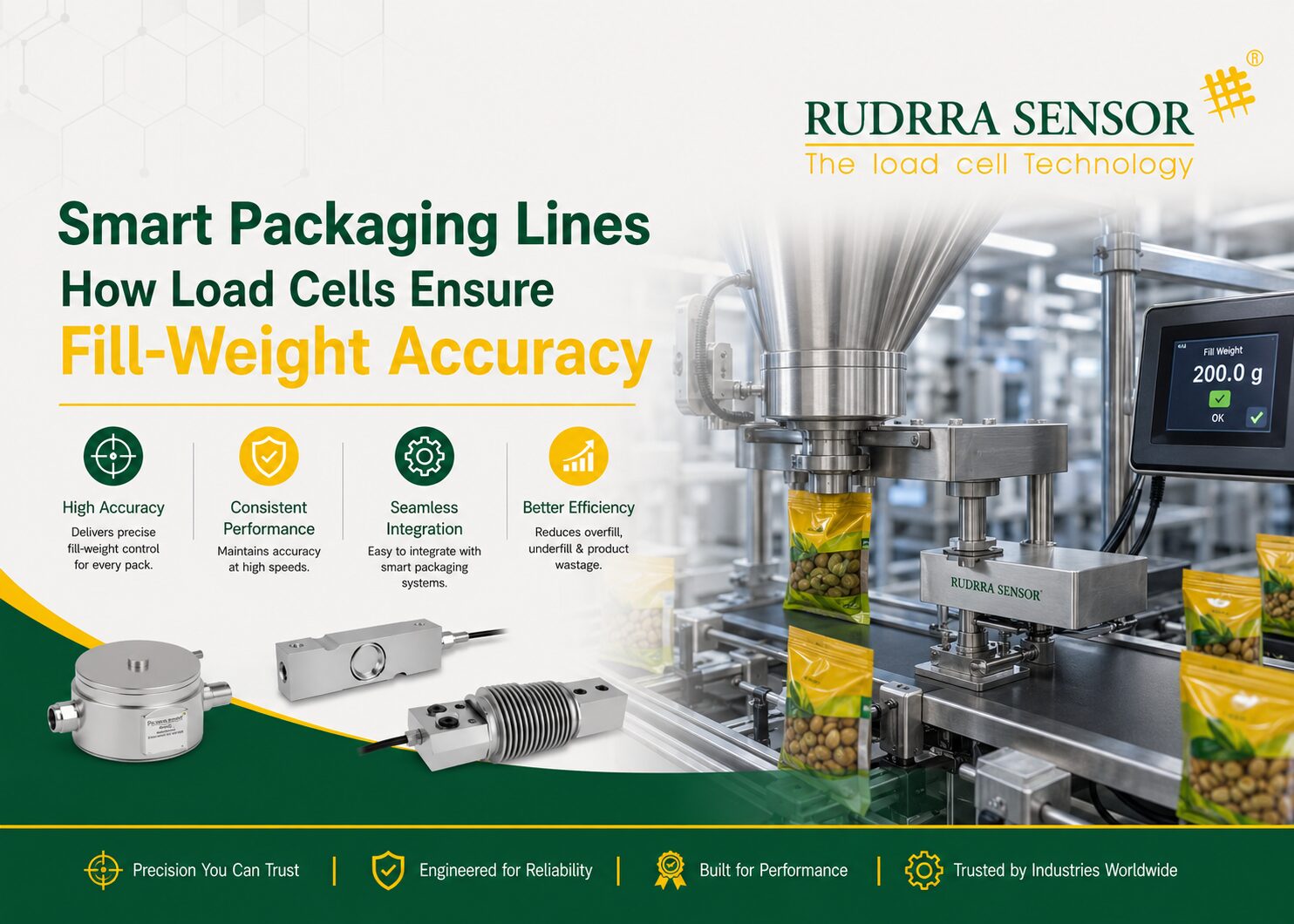
Smart Packaging Lines: How Load Cells Ensure Fill-Weight Accuracy
Industry Insight
Global packaging automation market is projected to exceed USD 78 billion by 2027. At the heart of this revolution are precision load cells that silently govern fill-weight accuracy on millions of packaging lines every single day.
Picture this: a busy snack food plant running three shifts, packaging 50,000 bags of crisps per hour. A drift of just two grams per bag — barely perceptible to the naked eye — costs the company over 100 kilograms of lost product every single hour. Over a year, that overfill adds up to hundreds of thousands of dollars in direct material loss. Flip the scenario: underfill by those same two grams and the plant faces regulatory penalties, consumer complaints, and potential product recalls.
Fill-weight accuracy is not a convenience — it is a commercial necessity, a legal obligation, and a brand-reputation safeguard. And in modern automated packaging environments, load cells are the precision instruments that make that accuracy possible at high speed.
This guide explores how smart packaging lines are architected around industrial load cells, what types of sensors serve different applications, how they integrate with PLCs, SCADA systems, and IoT platforms, and why every serious manufacturing operation should consider precision weighing the backbone of their quality strategy.
Whether you manage a food processing facility, a pharmaceutical production unit, a chemical plant, or an FMCG assembly line, this article provides the technical depth, practical insight, and strategic context you need to understand — and optimize — fill-weight accuracy on your packaging lines.
What Are Smart Packaging Lines?
Smart packaging lines are automated, sensor-driven production systems that manage the entire packaging workflow — from product dosing and filling to sealing, labeling, checkweighing, and palletizing — with minimal human intervention and real-time data intelligence.
Unlike traditional packaging systems that rely heavily on manual checks and periodic sampling, smart packaging lines are built around continuous data collection. Every station communicates with every other station. Sensors detect anomalies the moment they occur. Control systems react in milliseconds. Data logs every measurement for traceability and audit compliance.
Core Characteristics of a Smart Packaging Line
- Real-time weight monitoring at multiple checkpoints
- Closed-loop feedback between filling machines and load cell outputs
- PLC-controlled actuation based on live weight data
- SCADA dashboards providing plant-wide operational visibility
- IoT connectivity for remote monitoring and predictive maintenance
- Integration with MES and ERP for production planning and compliance
- Automatic rejection of out-of-tolerance packages without stopping the line
The transition from conventional to smart packaging is not simply a technology upgrade — it is a fundamental change in how manufacturers think about quality, waste, compliance, and efficiency. Load cells are at the physical core of that transformation.
Key Takeaway
Smart packaging lines replace reactive quality checks with proactive, continuous weight measurement that prevents defects rather than merely detecting them.
Evolution of Automated Packaging Systems
The journey from manual packaging to fully automated smart lines spans several decades of incremental technological progress.
Era 1 — Manual Packaging (Pre-1970s)
Workers filled containers by hand, checking weights with mechanical platform scales at random intervals. Accuracy depended entirely on operator skill and attentiveness. Variation was wide, giveaway was high, and throughput was limited.
Era 2 — Semi-Automated Lines (1970s–1990s)
Electromechanical filling machines improved throughput but still relied on periodic manual verification. Simple analogue load cells began to appear in checkweigher stations, offering a basic automated weight check at the end of the line.
Era 3 — Fully Automated Lines (1990s–2010s)
Digital load cells, PLC integration, and SCADA systems transformed packaging from a labour-intensive process into a managed, data-driven operation. Closed-loop weight control became possible, allowing filling machines to auto-correct dosing in real time.
Era 4 — Smart Manufacturing / Industry 4.0 (2010s–Present)
IoT connectivity, cloud analytics, machine learning, and edge computing have elevated packaging automation to a new level. Today’s smart lines not only measure and correct — they predict failures, optimise performance, and report compliance automatically.
| Era | Technology | Accuracy | Data Capture | Human Dependency |
| Manual | Mechanical scales | ±5–10% | None / paper logs | Very High |
| Semi-Automated | Basic electromechanical sensors | ±2–3% | Minimal | High |
| Fully Automated | Digital load cells + PLC/SCADA | ±0.1–0.5% | Digital logs | Low |
| Smart / Industry 4.0 | IoT load cells + AI analytics | ±0.01–0.1% | Real-time cloud data | Minimal |
Why Fill-Weight Accuracy Matters in Manufacturing
Fill-weight accuracy is the precise correspondence between the declared net weight of a packaged product and the actual weight it contains. Achieving consistent fill-weight accuracy is critical for multiple reasons that span financial, legal, operational, and reputational dimensions.
Financial Impact — Product Giveaway
Overfilling is the most common form of product giveaway. When a manufacturer consistently fills containers beyond the declared weight — even by a fraction of a gram — they give away product for free. For high-value commodities such as coffee, pharmaceutical powders, spices, or dairy products, even 1–2 grams of consistent overfill per unit translates into significant annual losses across a high-speed line.
Legal and Regulatory Compliance
Across most jurisdictions, the net weight of packaged goods is strictly governed by legislation. In India, the Legal Metrology Act 2009 and its associated Packaged Commodities Rules govern net weight declarations. The European Union enforces the Measuring Instruments Directive (MID) and OIML recommendations for packaged goods. The United States FDA and USDA have their own weight labelling regulations.
Underfilling — packaging less than the declared weight — is a legal offence that can result in fines, mandatory recalls, suspension of manufacturing licences, and serious damage to brand equity.
Consumer Trust and Brand Integrity
In an era of social media and instant consumer feedback, a single viral post about a short-filled product can damage a brand far beyond the cost of the underfill itself. Consistent, accurate fill weights build consumer trust and reinforce quality brand positioning.
Operational Efficiency
Accurate filling reduces rework, minimises line stoppages for manual weight corrections, reduces the cost of non-conforming product destruction, and optimises raw material usage. A line running at precise fill weights is simply a more profitable line.
Pro Tip
Calculate your current giveaway cost by multiplying average overfill weight by production volume and product unit cost. Even 0.5 gram consistent overfill on a 1,000 unit-per-minute line may cost INR 50–80 lakhs annually for mid-value products.
Understanding Load Cells
A load cell is a transducer — a device that converts a mechanical force (weight, tension, compression, or torque) into a proportional electrical signal. In packaging applications, load cells convert the weight of a product into a measurable voltage or digital output that the control system uses to verify, adjust, or reject fill quantities.
Modern industrial load cells are extraordinarily precise instruments. A well-calibrated, high-quality load cell can measure weight changes of as little as 0.1 grams in a full-scale range of 10 kilograms — an accuracy of 0.001%. This precision, combined with speeds that allow thousands of measurements per second, makes load cells uniquely suited to the demands of high-speed packaging lines.
Key Load Cell Parameters
| Parameter | Definition | Typical Range |
| Rated Capacity | Maximum load the cell can measure | 100g to 50,000kg |
| Accuracy Class | OIML classification (C2, C3, D1 etc.) | C3 or C4 for packaging |
| Non-Linearity | Maximum deviation from true straight-line output | 0.01% to 0.05% FS |
| Hysteresis | Output difference loading vs unloading | 0.01% to 0.05% FS |
| Creep | Output drift under constant load | < 0.03% FS / 30 min |
| Temperature Effect | Output change per degree C | < 0.003% FS/°C |
| IP Rating | Protection against water and dust ingress | IP66 to IP69K |
| Output Signal | Electrical signal type | mV/V analogue or digital |
Working Principle of Load Cells
Most industrial load cells — particularly those used in packaging — operate on the principle of strain gauge technology. Understanding this principle helps engineers select, install, and troubleshoot load cells with greater confidence.
Strain Gauge Technology
A strain gauge is a resistive element — typically a thin metallic foil pattern bonded to a flexible backing — that changes its electrical resistance when deformed. When a mechanical load is applied to the load cell body, the metal deforms elastically. The strain gauges bonded to that metal body deform proportionally, changing their resistance.
This resistance change is extremely small — typically a few milliohms in response to full rated load. To detect such minute changes accurately, strain gauges are arranged in a Wheatstone bridge circuit. The bridge circuit converts the tiny resistance changes into a measurable voltage output, typically in the range of 1–3 millivolts per volt of excitation.
Signal Processing Chain
- Mechanical load applied to load cell body
- Elastic deformation of load cell metal element
- Proportional resistance change in strain gauges
- Wheatstone bridge outputs proportional millivolt signal
- Signal amplified by analogue or digital signal conditioner
- Conditioned signal transmitted to PLC, indicator, or weighing controller
- Control system acts: approve, reject, or adjust filling
Technical Note
Modern digital load cells integrate the signal amplifier, A/D converter, and digital communications interface (RS-485, CANbus, or proprietary protocols) directly into the load cell housing, eliminating the need for external signal conditioning and dramatically improving noise immunity.
Types of Load Cells Used in Packaging
Different packaging applications require different load cell configurations. The type of mechanical arrangement, the capacity range, the environmental requirements, and the accuracy specifications all influence which load cell design is most appropriate.
Compression vs Tension Load Cells
Compression Load Cells
Compression load cells are designed to measure forces pushing down on them. They are commonly installed beneath hoppers, tanks, and vessel platforms in packaging lines — particularly for bulk material management, batching systems, and platform scales at filling stations.
Their flat, robust construction makes them highly suitable for hygienic environments. They tolerate overload well and can be manufactured with IP69K ratings for wash-down environments in food and pharmaceutical facilities.
Tension (Hanging) Load Cells
Tension load cells measure pulling forces. In packaging, they are typically used in hanging scale configurations, conveyor tension measurement, and web tension monitoring in roll-fed packaging machinery. They are also used in overhead vessel weighing systems where tanks hang from the load cell rather than resting on it.
| Feature | Compression Load Cell | Tension Load Cell |
| Mounting | Beneath vessel or platform | Hanging / overhead |
| Primary Force | Compressive (push down) | Tensile (pull down) |
| Common Applications | Hoppers, tanks, platform scales | Hanging vessels, web tension |
| Construction | Compact, low-profile | Elongated, with threaded fittings |
| Overload Tolerance | Excellent | Good |
| IP Rating Availability | IP66–IP69K | IP65–IP68 |
| Typical Capacity Range | 50kg–50,000kg | 10kg–20,000kg |
Single Point Load Cells
Single point load cells are among the most widely used load cell types in packaging applications. They are specifically designed to measure loads applied at any point across a defined platform area — hence the name.
The mechanical design of a single point load cell incorporates internal moment compensation, meaning that off-centre loading across the platform does not significantly affect measurement accuracy. This makes them ideal for small to medium-capacity platform scales, conveyor belt scales, and filling station weigh platforms where product placement is not always perfectly centred.
Key Advantages for Packaging
- Excellent accuracy regardless of load position on the platform
- Simple, low-profile installation under a weighing platform
- Available in aluminium (food-grade) and stainless steel (pharmaceutical/chemical grade)
- Typical capacities from 2 kg to 500 kg
- IP65–IP67 ratings available for hygienic environments
- Very cost-effective for mid-speed packaging lines
Shear Beam Load Cells
Shear beam load cells measure load through the shear stress induced in their beam-shaped body. Unlike bending beam designs, shear beam cells are inherently more resistant to side forces and bending moments, making them highly suited to dynamic weighing applications.
In packaging lines, shear beam load cells are frequently used in high-capacity tank and hopper weighing systems — for example, in bulk powder filling stations, liquid ingredient batching, and large-format container filling. Their rugged construction and excellent dynamic performance make them a preferred choice for applications where large loads are applied quickly.
They are also commonly used under conveyor belt weighers, where the continuous motion of the belt introduces side forces that would compromise the accuracy of other load cell types.
CIP, Wash-Down, and Sterilisation Compatibility
How hygienic load cells survive and perform through the food industry cleaning regime
The Food Industry Cleaning Regime — What Load Cells Must Withstand
Food processing equipment is cleaned far more frequently and far more aggressively than equipment in general manufacturing. Depending on the product type and production schedule, food processing areas may be cleaned once or twice daily using a combination of:
- Foam cleaning: alkaline (caustic soda, concentration 1-3%, temperature 40-60°C) or neutral foam applied to all surfaces and allowed to dwell before rinsing
- High-pressure rinsing: hot water at 60-80°C applied at pressures of 40-150 bar through a high-pressure lance or rotating nozzle system
- Sanitising: chlorine-based (sodium hypochlorite, 100-300 ppm), peracetic acid (0.1-0.3%), or quaternary ammonium compound sanitisers applied after cleaning
- Steam cleaning: live steam at 100°C or above, used for disinfection of specific areas or equipment
Load cells in food processing areas must withstand this cleaning regime multiple times every working day, every working week, for years of service. An IP69K-rated load cell has been tested against a simulated high-pressure wash with water at 80°C, 80 bar pressure, at 14-16 litres per minute, from all angles at a distance of 10-15 cm — and has passed with no water ingress. This test is considerably more severe than the cleaning that most food plants actually apply, providing a genuine safety margin.
CIP Compatibility for Tank and Vessel Load Cells
Clean-in-Place (CIP) systems clean the interior of food processing tanks, vessels, and pipework without disassembly, using recirculating cleaning solutions. For load cells mounted externally on tank supports or weigh frames, CIP itself does not directly affect the load cell — but the external cleaning of the CIP installation does. The tank exterior, the weigh frame structure, and the load cells are typically cleaned simultaneously with the rest of the production area, using the high-pressure, high-temperature, chemical-laden cleaning process described above.
For load cells in areas where the CIP return lines pass close to the mounting structure — or where product overflow or CIP spillage may wet the load cell body — IP69K sealing and 316L construction are essential. In sterilising-in-place (SIP) applications, where the vessel and load cells are exposed to steam at 121-134°C, the load cell must be specified for the relevant temperature range and its seals must be steam-compatible.
Inspection and Maintenance After Cleaning
After each cleaning cycle, a visual inspection of load cell installations should verify that seals are intact, cable entries are undamaged, and the load cell body shows no signs of corrosion, cracking, or mechanical damage. Any anomaly must be investigated and resolved before returning the installation to production use. The periodic checks described here are a fundamental part of HACCP-based food safety management in any facility using load cell-based weighing.
Cable runs from load cells in food processing areas deserve particular attention. Cables should be routed in stainless steel conduit or cable trays that can themselves be cleaned, with no horizontal runs where cleaning water can pool. Cable entry to junction boxes should be sealed with food-grade glands, and junction box locations should be in areas accessible for inspection but out of the direct path of cleaning equipment.
S-Type Load Cells
S-type load cells are named for their characteristic S-shaped body profile. This design allows them to measure both tension and compression forces, making them exceptionally versatile in packaging environments.
In packaging lines, S-type load cells are commonly found in filling machine heads, ingredient batching systems, and applications where load must be measured in both directions. They are also used in wire and cable tension measurement in roll-fed packaging systems, and in overhead hopper weighing where the vessel may exert both tension (when suspended) and compression (in certain mounting configurations).
S-Type Load Cell Applications in Packaging
- Filling machine head weight sensing
- Ingredient batching and recipe management
- Hanging hopper weight measurement
- Film web tension monitoring
- Conveyor tension balancing
Digital Load Cells
Digital load cells represent the current state-of-the-art in industrial weighing technology. They integrate analogue-to-digital conversion, signal processing, temperature compensation, and digital communications directly within the load cell housing.
The primary advantage of digital load cells over their analogue counterparts is their dramatically superior noise immunity. In a busy packaging plant, electrical interference from motors, variable frequency drives, and other machinery can corrupt the tiny millivolt signals from analogue load cells. Digital load cells convert the signal to digital format before transmission, making the signal essentially immune to electromagnetic interference (EMI).
Digital load cells also support advanced features such as individual cell diagnostics, load-sharing calculations in multi-cell platforms, built-in overload detection, and direct integration with Industry 4.0 data networks.
Analog vs. Digital Load Cells — Detailed Comparison
| Feature | Analogue Load Cell | Digital Load Cell |
| Signal Type | Millivolt per volt (mV/V) | Digital (RS-485, CANbus, etc.) |
| Signal Conditioning | External amplifier required | Built-in A/D conversion |
| Noise Immunity | Susceptible to EMI | Highly immune to EMI |
| Cable Length Limitation | 30–50m max (signal degradation) | 500m+ without degradation |
| Temperature Compensation | External or limited | Advanced built-in digital compensation |
| Diagnostic Capability | None / minimal | Full cell diagnostics & monitoring |
| Multi-Cell Management | Complex junction box setup | Digital summing & load sharing |
| Installation Complexity | Moderate | Lower — fewer wiring components |
| Accuracy | Up to 0.02% FS | Up to 0.005% FS |
| Cost | Lower initial cost | Higher initial, lower total cost |
| Industry 4.0 Compatibility | Limited / via converter | Direct integration |
| Predictive Maintenance | Not supported | Supported with trend monitoring |
| Best Application | Budget retrofits, simple scales | High-precision, smart factory lines |
Expert Recommendation
For new packaging line installations, digital load cells are almost always the better long-term investment. The total cost of ownership — including installation, maintenance, and the value of diagnostic data — typically favours digital technology within 18–24 months of operation.
Components of a Smart Packaging Line
A modern smart packaging line is an orchestrated system of multiple sub-systems working in close coordination. Understanding how load cells fit within this broader system architecture is essential for effective integration and optimisation.
Primary Components
| Component | Function | Load Cell Role |
| Bulk Feeding System | Raw material storage and delivery to fillers | Silo/hopper weight monitoring |
| Dosing / Filling Machine | Precise filling of product into containers | In-flight weight sensing, closed-loop control |
| Conveyor System | Moving products through the line | Belt weigher, dynamic weight check |
| Checkweigher | 100% weight verification of filled packages | High-speed precision weighing |
| Rejection System | Removing out-of-spec packages | Triggered by checkweigher load cell signal |
| Sealing Machine | Closing containers | Post-seal weight verification (optional) |
| Labelling Machine | Applying weight declarations and barcodes | Receives confirmed weight data |
| PLC System | Centralised process control | Receives all load cell signals |
| SCADA / HMI | Operator monitoring and control interface | Displays weight data and trends |
| MES / ERP System | Production management and traceability | Receives weight data for records |
Integration of Load Cells in Packaging Equipment
The integration of load cells into packaging equipment goes far beyond simply bolting a sensor to a machine frame. Effective integration involves mechanical mounting design, signal transmission architecture, control system programming, and calibration protocols — all working together to deliver accurate, repeatable weight measurement.
Mechanical Integration Considerations
- Load cell mounting must isolate the cell from vibration transmitted by adjacent machinery
- Mounting surfaces must be flat, rigid, and level to prevent eccentric loading
- Hermetic or environmentally sealed load cells must be used in wet or dusty environments
- Cable routing must avoid pinch points, heat sources, and high-voltage conductors
- Overload protection devices should be fitted to prevent load cell damage during maintenance
Electrical Integration Considerations
- Shielded, screened cables must be used for analogue load cell signal transmission
- Cable shields should be grounded at one end only (typically the indicator/controller end)
- Excitation voltage should be stable and properly rated for the load cell specification
- Digital load cells require proper network termination and address configuration
- Surge and transient protection is recommended in industrial environments
Load Cells in Filling Machines
The filling machine is the most critical point of fill-weight accuracy in any packaging line. This is where the product meets the container, and where overfill or underfill occurs. Load cells at the filling stage provide direct, real-time feedback that enables closed-loop control of the dosing mechanism.
Gravimetric Filling Principle
In gravimetric filling, the container or the filling head itself sits on or incorporates a load cell. As product flows into the container, the load cell continuously measures the increasing weight. When the target weight is reached, the control system signals the filling valve or auger to stop. This provides direct weight-based fill control — the most accurate method available for liquid, powder, granule, and paste filling.
Gravimetric filling with closed-loop load cell control can achieve fill accuracy within ±0.1% of target weight at filling speeds of up to several hundred units per minute, depending on product characteristics and filling head design.
Net Weight vs. Gross Weight Filling
Net weight filling measures only the product weight by taring out the container weight before filling begins. This requires a stable, accurate tare measurement for each container. Gross weight filling measures the total weight (container plus product) and subtracts a nominal tare weight. Net weight filling is more accurate but requires an additional container pre-weigh step; gross weight filling is faster but relies on consistent container weights.
Pro Tip
For pharmaceutical and high-value food products, net weight gravimetric filling is strongly preferred. For high-speed FMCG applications with consistent container weights, gross weight filling with statistical process control is often the practical optimum.
Role of Load Cells in Checkweighers
The checkweigher is the quality gatekeeper of the packaging line. Every finished package passes through the checkweigher, and the load cell within it makes an accept/reject decision in a fraction of a second. Modern high-speed checkweighers can process 200–600 packages per minute while maintaining milligram-level accuracy.
How a Checkweigher Works
- Package enters the weighing conveyor belt section
- Load cell measures dynamic weight as package crosses the weigh zone
- Signal processing algorithms correct for belt vibration and package momentum
- Calculated weight compared against minimum, target, and maximum weight tolerances
- PLC triggers rejection mechanism for under-weight or over-weight packages
- Accepted packages proceed down the line; rejected packages are diverted
- Weight data logged for SPC analysis and regulatory traceability
Checkweigher Load Cell Requirements
Checkweigher load cells must combine high accuracy with extremely fast response times. A package may be on the weigh belt for less than 200 milliseconds at high speed, requiring the load cell and signal processing system to complete a full measurement cycle within that window. This demands:
- Very high natural frequency (stiff cell design)
- Fast settling time after load application
- Robust vibration rejection algorithms
- Consistent performance across the full environmental temperature range
- High fatigue life — checkweigher load cells measure millions of packages per year
Load Cells in Conveyor Weighing Systems
Belt conveyor weighers — also called conveyor belt scales or weigh feeders — use load cells mounted beneath one or more idler assemblies on a conveyor belt to measure the weight of material passing over them. The belt speed, measured by a tachometer, combined with the load cell signal, gives a continuous measurement of the mass flow rate in kilograms per hour.
In packaging lines, belt weighers are used for bulk material management between process stages — for example, monitoring the rate at which ingredients flow from a receiving conveyor into a storage silo, or tracking the output rate of a filling line. They are a crucial tool for mass balance and yield management.
Load Cells in Bagging Machines
Bagging machines — whether open-mouth baggers, form-fill-seal machines, or valve bag filling systems — use load cells in several ways to achieve accurate fill weights for dry powders, granules, and other free-flowing bulk materials.
Gross weight bagging uses load cells beneath the bag during filling. The bag hangs from a bag clamp that rests on the load cell weigh platform. As the auger, impeller, or fluidised feeding system fills the bag, the load cell monitors the growing weight until the target is achieved, at which point the fill valve closes.
Net weight bagging first tares the empty bag on the load cell, then fills to the net target weight. This method compensates for variations in bag weight and is preferred for accuracy-critical applications.
Applications in Bottling Plants
Bottling plants — whether filling water, carbonated beverages, juices, edible oil, spirits, or pharmaceutical liquids — rely heavily on load cells for accurate liquid filling and quality verification.
In rotary filling machines, each filling head may incorporate a dedicated load cell or a shared load cell array that monitors fill levels across multiple heads simultaneously. The volumetric filling accuracy of rotary fillers is well established, but gravimetric checking with load cells provides an absolute verification that volumetric methods alone cannot offer — particularly for products whose density may vary with temperature or batch composition.
Specific Bottling Applications
- Pre-fill tare weighing of empty bottles (to account for weight variation between batches)
- In-line fill weight verification of every bottle via integrated checkweigher
- Batch reconciliation using tank load cells on ingredient vessels
- CIP (Clean-in-Place) chemical dosing verification via load cell on concentrate tanks
- Finished goods case weight verification before palletising
Applications in Food Packaging
The food industry presents some of the most demanding requirements for fill-weight accuracy. Products range from dry powders and granules to sticky pastes, viscous sauces, fresh produce, and frozen items. Each presents unique challenges that require carefully selected and configured load cell solutions.
Food Industry Challenges and Load Cell Solutions
| Food Product Type | Filling Challenge | Load Cell Solution |
| Powdered spices & seasonings | Dusty environment, density variation | IP67 load cells, anti-dust enclosures |
| Fresh meat & poultry portions | Sticky products, contamination risk | Washdown IP69K cells, HACCP design |
| Snack foods (crisps, nuts) | Fragile products, high speed | High-frequency dynamic checkweighers |
| Liquid sauces & condiments | Viscous flow, drip contamination | Sealed filling head load cells |
| Bakery & confectionery | Irregular shapes, multiple components | Multi-component weighing combiners |
| Frozen foods | Temperature extremes, ice buildup | Low-temp rated stainless cells |
| Fresh produce (salads, veg) | Variable density, loose packs | Multi-head weigher combination scales |
| Dairy products (cheese, butter) | Hygienic requirements, fat contamination | Full stainless steel, IP69K |
Food packaging regulations in India under FSSAI, and globally under Codex Alimentarius, mandate that packaged food quantities meet declared net weights within specified tolerance limits. Load cells are the technical foundation of compliance with these regulations.
Applications in Pharmaceutical Packaging
Pharmaceutical packaging represents the highest-accuracy, most tightly regulated application of load cells in the packaging industry. The consequences of fill-weight error in pharmaceuticals are not merely financial — they are clinical. An underfilled blister pack, vial, or capsule could mean a patient receives a sub-therapeutic dose. An overfilled container creates an overdose risk.
Pharmaceutical-Specific Requirements
- 100% weight verification — every single unit, not statistical sampling
- 21 CFR Part 11 compliant data logging for FDA-regulated products
- GAMP 5-aligned validation of weighing systems and software
- Load cell calibration traceable to national metrology standards
- IQ/OQ/PQ qualification protocols for every load cell installation
- Audit trail with time-stamped weight records and operator signatures
- Load cells must meet pharmaceutical-grade material and surface finish requirements
In sterile fill-finish operations — where vials, ampoules, and syringes are filled under Grade A/B cleanroom conditions — load cells must be constructed from materials that are compatible with aggressive cleaning agents and sterilisation processes. Stainless steel 316L construction with electropolished surfaces and FDA-compliant seals is standard.
Applications in Chemical Packaging
Chemical packaging encompasses a vast range of products — from household cleaning agents and agricultural chemicals to industrial solvents, lubricants, and specialty chemicals. The common thread is that many chemicals are hazardous, corrosive, flammable, or toxicologically sensitive, which imposes stringent requirements on load cell design and installation.
Chemical Industry Load Cell Requirements
- ATEX / IECEx certification for Zone 1 and Zone 2 explosive atmospheres
- Construction materials resistant to chemical attack (Hastelloy, titanium, or special coatings)
- Sealed, hermetic construction to prevent chemical ingress
- Weight verification for regulatory compliance (e.g., UN packaging regulations for dangerous goods)
- Batch chemical dosing accuracy for formulated products
- Legal metrology compliance for commercial chemical sales by weight
Applications in FMCG Packaging
Fast-Moving Consumer Goods manufacturing operates at extreme scale and speed. A typical FMCG packaging line may run at 300–600 units per minute, processing millions of units per shift. At this pace, even sub-percent fill accuracy variations add up to material losses or compliance risks that have serious financial consequences.
FMCG packaging also operates under intense cost pressure, making the ROI case for precision load cells particularly compelling. The reduction in product giveaway alone — across a product portfolio running at thousands of units per minute — can justify the capital investment in high-accuracy weighing systems within weeks.
FMCG Load Cell Applications
- High-speed checkweighing on primary packaging lines
- Multi-head combination weighers for irregular-shape products
- Ingredient batching and recipe management in compound products
- Finished goods case weight verification
- Statistical process control data collection for OEE optimisation
Accuracy Standards in the Packaging Industry
Fill-weight accuracy standards govern the maximum permissible error (MPE) in packaged goods. These standards establish the rules by which manufacturers, regulators, and inspectors determine whether a package is adequately filled.
| Standard / Regulation | Region | Scope | Key Requirement |
| Legal Metrology Act 2009 / PCR | India | All packaged commodities | Average quantity rule + MPE by product weight |
| EU Directive 2014/31/EU (NAWI) | European Union | Non-automatic weighing instruments | Accuracy classes; conformity assessment |
| EU Dir. 76/211/EEC (Packaged Goods) | European Union | Packaged consumer goods | Average quantity + T1/T2 tolerance limits |
| OIML R 61 | International | Automatic checkweighers | Accuracy classes XI through XIIII |
| OIML R 51 | International | Automatic gravimetric filling | Accuracy classes from Y(a) to Y(0.5) |
| FDA 21 CFR 820 / 211 | USA (Pharma) | Pharmaceutical manufacturing | 100% inspection or validated sampling |
| NIST Handbook 44 | USA | Commercial weighing instruments | Tolerance tables by scale class |
| FSSAI | India (Food) | Food products | Net quantity declarations, MPE |
Legal Metrology and Compliance
Legal metrology is the branch of measurement science concerned with quantities and units that have legal relevance — primarily commercial transactions, public health, and safety. For packaging manufacturers in India, the Legal Metrology Act 2009 and the Packaged Commodities Rules 2011 govern the net quantity declarations on all pre-packaged goods.
Under these regulations, a packaged commodity must not be sold if its net quantity is less than the declared quantity by more than the prescribed MPE for that quantity range. Manufacturers are required to maintain measurement accuracy by using properly calibrated weighing instruments — which means load cells must be part of a legally compliant, traceable weighing system.
Compliance Checklist for Load Cell-Based Weighing Systems
- Load cells must carry OIML type approval or BIS certification as applicable
- Weighing systems must be verified and stamped by legal metrology authorities
- Calibration must be performed at specified intervals using traceable reference weights
- Calibration records must be maintained and available for inspection
- Systems must implement the average quantity rule — statistical compliance
- Reference check weights must be maintained and periodically re-verified
Reducing Product Giveaway
Product giveaway — the systematic overfilling of packages beyond the declared net weight — is a pervasive but controllable source of manufacturing cost. It occurs when manufacturers deliberately set fill targets above the nominal weight to create a safety buffer against the risk of underfill. The root cause is fill-weight variation: the wider the variation, the higher the target must be set to avoid underfill.
Load cells directly address the root cause by reducing variation. A high-precision load cell system can reduce fill-weight standard deviation by 60–80% compared to a volumetric filling system without weight feedback. This allows manufacturers to reduce their safety margin — their giveaway buffer — by a proportional amount, directly recovering material that was previously being given away.
Case Example
A coffee manufacturer running a 500g pack on a high-speed line was targeting 510g to avoid underfill complaints. After installing a closed-loop gravimetric filling system with Rudrra Sensor load cells, fill standard deviation dropped from 4.2g to 0.8g. This allowed the target to be reduced to 503g — saving 7g per pack. At 200 packs per minute across two shifts, this saved over 2,400kg of coffee per day — a direct cost saving of several lakhs per week.
Minimising Underfilling Risks
Underfilling — delivering less than the declared quantity — is not just a consumer relations issue; it is a legal offence under most national measurement laws. But underfilling can be subtle and intermittent, making it difficult to detect without comprehensive weighing coverage.
Load cells, when properly deployed, provide the detection infrastructure needed to catch underfilling events before packages reach the consumer. A checkweigher with a properly calibrated load cell and correctly set tolerance limits will reject every underweight package. Real-time SPC data from the checkweigher can also identify drift trends before they result in systematic underfill, allowing operators to intervene proactively.
Quality Control Through Precision Weighing
Weight is one of the most fundamental indicators of product quality in packaging. Beyond the immediate fill-weight accuracy question, weight data carries rich information about the quality of upstream processes.
Consistent weight in a packaged food product indicates consistent ingredient dosing, which correlates with consistent nutritional content and taste. Consistent weight in a pharmaceutical product indicates consistent active ingredient loading. Consistent weight in a chemical product indicates consistent formulation. In each case, the load cell is not merely measuring weight — it is measuring product quality as expressed through its physical quantity.
SPC Metrics from Checkweigher Data
- Mean fill weight — indicates target calibration accuracy
- Standard deviation — indicates filling process stability
- Cpk process capability index — indicates how well the process fits within specification limits
- Trend analysis — identifies gradual drift before it becomes a compliance issue
- Rejection rate analysis — highlights specific machines or SKUs with accuracy problems
Smart Sensors and Industry 4.0
Industry 4.0 — the Fourth Industrial Revolution — is characterised by the convergence of physical and digital systems in manufacturing. Smart sensors, including digital load cells, are the physical nerve endings of Industry 4.0-enabled factories.
A traditional load cell measures weight and outputs a signal. A smart load cell in an Industry 4.0 environment does far more. It measures weight and simultaneously monitors its own health, reports calibration drift, participates in a digital data network, sends alerts when its output trends indicate a potential issue, and integrates directly with cloud-based analytics platforms.
Industry 4.0 Capabilities of Modern Load Cell Systems
- OPC-UA communication for direct integration with industrial IoT platforms
- MQTT protocol support for lightweight, high-speed data publishing
- Edge computing for on-device signal processing and anomaly detection
- Digital twin integration — real-time weight data feeds a virtual model of the packaging line
- Automatic production reporting — weight data directly populates ERP records
- Remote calibration verification — calibration status checked from the control room
IoT-Enabled Packaging Systems
IoT-enabled packaging systems extend the data connectivity of load cells beyond the local PLC to enterprise networks, cloud platforms, and mobile devices. Operators and managers can monitor fill-weight performance, view trend data, and receive alerts from anywhere in the world with a smartphone.
For multi-plant manufacturing groups, IoT connectivity enables centralised quality monitoring across all facilities. A quality manager at headquarters can see real-time checkweigher performance for every plant simultaneously, identify underperforming lines, and dispatch corrective action — all without leaving the office.
IoT Architecture for Load Cell-Based Packaging
- Load cell measures weight — signal processed locally
- Edge gateway aggregates data from multiple cells and instruments
- Data published via MQTT or OPC-UA to local SCADA or cloud platform
- Cloud analytics processes data, detects trends, generates alerts
- Dashboards on desktop, tablet, and mobile display real-time status
- Alerts sent to relevant personnel via email, SMS, or push notification
- Historical data stored for audit, compliance, and optimisation analysis
Real-Time Monitoring with Load Cells
Real-time monitoring transforms weight data from a record of what happened into an instrument for controlling what is happening right now. When load cell data is available in real time on operator displays and control system screens, operators can detect and respond to fill weight drift, equipment faults, and material flow issues immediately — rather than discovering them during a periodic manual check.
Modern checkweigher displays and SCADA systems present real-time weight histograms, trend charts, and statistical process control indicators that give operators instant situational awareness. Automated alerts flag the moment a process parameter moves outside acceptable bounds.
Predictive Maintenance
One of the most compelling benefits of digital load cells in smart packaging lines is their ability to support predictive maintenance. Rather than waiting for a load cell to fail — causing an unplanned line stoppage and potentially allowing out-of-spec product to pass — predictive maintenance uses the load cell’s own diagnostic data to anticipate failure before it occurs.
Predictive Maintenance Indicators from Load Cells
- Gradual drift in zero offset — may indicate mechanical creep or mounting loosening
- Increasing noise in the signal — may indicate cable damage, connector corrosion, or gauge deterioration
- Temperature-correlated output variation — may indicate compromised temperature compensation
- Progressive non-linearity — may indicate overload damage or mechanical deformation
- Zero return failure — may indicate plastic deformation of the load cell body
By monitoring these diagnostic indicators continuously, maintenance teams can schedule load cell replacement or recalibration during planned downtime, avoiding the far more costly impact of an unplanned stoppage on a high-speed packaging line.
PLC and SCADA Integration
The PLC (Programmable Logic Controller) is the primary control intelligence of a packaging line. Load cells communicate their weight measurements to the PLC, which uses this data to control the filling process, trigger rejection mechanisms, and communicate with upstream and downstream processes.
Load Cell to PLC Integration Methods
| Integration Method | Signal Type | Speed | Suitable For |
| Analogue input module | 4–20mA or ±10V | Moderate | Simple checkweighers, basic filling |
| Serial RS-485 / Modbus | Digital serial | Good | Multi-cell systems, batch weighing |
| PROFIBUS-DP | Digital fieldbus | Fast | High-speed packaging, PLC-intensive lines |
| PROFINET / EtherNet/IP | Industrial Ethernet | Very Fast | Industry 4.0, real-time control |
| OPC-UA | Industrial IoT | Fast | SCADA integration, cloud connectivity |
| CANopen | Digital fieldbus | Fast | Multi-cell filling machines |
SCADA systems visualise load cell data at the supervisory level, giving plant managers and quality engineers visibility into overall fill-weight performance, trend analysis, and historical records. SCADA integration also enables automated reporting for regulatory compliance and management review.
Data Analytics in Packaging Automation
The weight data generated by load cells on a modern packaging line is not just a pass/fail quality record — it is a rich operational dataset that, when properly analysed, reveals deep insights about machine performance, process stability, material quality, and operational efficiency.
Analytics Applications
- OEE (Overall Equipment Effectiveness) analysis — correlating fill weight variance with equipment state
- Product quality correlation — linking fill weight distribution to batch/material characteristics
- Machine comparison — identifying which filling heads or lines are most and least accurate
- Shift and operator analysis — detecting performance differences by time or operator
- Trend forecasting — predicting when process drift will require intervention
- Loss calculation — quantifying giveaway and underfill costs in real currency terms
Benefits of High-Precision Load Cells
Summary
High-precision load cells deliver quantifiable benefits across every dimension of packaging line performance — from product quality and regulatory compliance to operational efficiency and financial returns.
| Benefit Area | Specific Benefit | Typical Improvement |
| Financial | Reduced product giveaway | 0.3–1.5% of product value |
| Financial | Reduced rework and waste | 20–40% reduction in rejects |
| Quality | Improved fill-weight Cpk | From <1.0 to >1.67 |
| Compliance | Legal metrology conformance | 100% compliance achievable |
| Operational | Reduced manual checking | 60–80% reduction in manual effort |
| Maintenance | Predictive maintenance enablement | 30–50% reduction in unplanned downtime |
| Speed | Faster changeover (auto-calibration) | 15–30 min per changeover saved |
| Traceability | Automated weight records | 100% product traceability |
| Intelligence | SPC data for continuous improvement | Ongoing Cpk improvement |
Improving Production Efficiency
Precision load cells improve production efficiency in ways that extend well beyond fill-weight accuracy. When a filling machine has reliable, real-time weight feedback, it can operate closer to its mechanical throughput limit without the conservative safety margins that are necessary when weight accuracy is uncertain.
High-precision weighing also enables faster product changeovers. When calibration and target-setting data can be recalled digitally and verified automatically, changeover time shrinks significantly compared to manual adjustment and verification processes.
Reducing Downtime
Downtime on a packaging line is extraordinarily expensive. A high-speed FMCG line running at 400 units per minute may generate INR 15,000–25,000 of finished goods per minute. A one-hour unplanned stoppage represents INR 9–15 lakhs of lost production opportunity.
Load cells contribute to reducing downtime in three ways. First, by providing accurate weight data that prevents filling machine overloads and mechanical stress. Second, by enabling predictive maintenance that replaces reactive failure response with planned intervention. Third, by reducing the frequency of manual investigations caused by weight accuracy complaints.
Enhancing Operational Reliability
Operational reliability — the ability of a packaging system to perform its required function consistently under defined operating conditions — is directly enhanced by high-quality load cell technology. When the weighing foundation of a packaging line is accurate and stable, all downstream processes can be optimised with confidence.
Conversely, when weight measurement is unreliable, the entire line operates defensively — with wider tolerances, more conservative targets, and more frequent manual interventions. Investing in high-precision, properly installed and maintained load cells removes this uncertainty and allows the line to be run at its true optimum performance point.
Reducing Material Waste
Material waste in packaging lines takes three forms: product giveaway (product given away in overfilled packages), rejects (out-of-specification packages that must be reworked or destroyed), and process waste (material lost during start-up, changeover, and line stops).
Precision load cells address all three. Closed-loop weight control minimises overfill giveaway. High-accuracy checkweighing reduces false rejects — packages rejected unnecessarily due to inaccurate weighing. And faster, more reliable line start-ups and changeovers reduce the material consumed during these transitions.
Energy Efficiency in Smart Packaging
While load cells are not energy-consuming devices themselves, their role in optimising packaging line performance has indirect energy efficiency benefits. A packaging line running at optimal fill-weight accuracy requires fewer restarts, less rework conveying, and less rejection handling — all of which consume energy.
Additionally, smart packaging lines that use load cell data for process optimisation can reduce the running time required to produce a given output, reducing the total energy consumption per unit of finished goods.
Calibration of Load Cells
Calibration is the process of comparing a load cell’s output to a known reference standard and adjusting or characterising the relationship between the two. It is the foundation of measurement traceability — the chain of evidence that links your fill-weight measurements to national and international standards of mass.
Calibration Methods
Dead Weight Calibration
The most accurate calibration method. Certified reference weights of known mass (traceable to national standards) are applied to the load cell or weighing system, and the output is compared against the expected value at each calibration point. Adjustments are made to bring the output within specified accuracy limits.
Substitution Calibration
A calibrated reference weight is used to simulate the nominal load. Particularly useful where the load cell cannot easily be loaded with dead weights in situ — for example, a tank-mounted load cell system can be calibrated by applying a known weight to the empty tank.
OIML E2 / F1 Reference Weights
For legal metrology applications, reference weights must comply with OIML weight class specifications. F1 class weights are typical for industrial calibration; E2 class for high-accuracy laboratory calibration. In India, calibration weights must be verified by or traceable to the National Physical Laboratory (NPL).
Calibration Frequency
- High-speed checkweighers: monthly verification, annual full calibration minimum
- Filling machine load cells: monthly zero check, quarterly full calibration
- Tank and silo load cells: semi-annual calibration, more frequent for critical applications
- Pharmaceutical applications: validation protocol-driven, typically quarterly or more frequent
- Any load cell after mechanical disturbance, overload, or environmental exposure: immediate recalibration
Maintenance Best Practices
Proper maintenance of load cell systems is essential for sustaining the accuracy and reliability that justifies their specification. Load cells are robust instruments, but they are also precision devices that require respect and care.
Preventive Maintenance Schedule
| Task | Frequency | Why It Matters |
| Visual inspection of load cell and cable | Weekly | Early detection of physical damage |
| Zero point verification | Daily / shift | Ensures no offset accumulation |
| Span check with test weights | Monthly | Verifies accuracy stability |
| Cable and connector inspection | Monthly | Prevents moisture and corrosion ingress |
| Mount and fastener torque check | Quarterly | Prevents mechanical loosening |
| Full multi-point calibration | Annually (minimum) | Full accuracy verification and traceability |
| Overload protection check | Annually | Ensures mechanical protection is functional |
| Signal noise analysis | Quarterly | Early detection of electrical deterioration |
Common Load Cell Problems
Understanding the most common load cell failure modes helps maintenance teams diagnose problems quickly and accurately, minimising downtime and avoiding the cost of unnecessary replacement.
Failure Mode Analysis
- Zero drift: Progressive offset increase over time. Causes: temperature variation, creep, mounting instability, strain gauge deterioration. Solution: recalibration, check mounting, consider temperature compensation.
- Signal noise: Erratic, noisy weight readings. Causes: cable damage, connector corrosion, EMI, loose connections, moisture ingress. Solution: inspect cable and connectors, check shielding, replace if moisture-damaged.
- Non-linearity errors: Inaccurate readings at specific points in the range. Causes: overload damage, mounting eccentricity, mechanical deformation. Solution: return for repair or replace, review mounting conditions.
- Complete signal loss: Zero or full-scale reading. Causes: severed cable, blown excitation, open gauge. Solution: check cable continuity, measure excitation, replace load cell.
- Hysteresis errors: Different readings loading vs. unloading. Causes: overload damage, mechanical binding, contamination. Solution: inspect mounting for binding, check for debris, recalibrate.
Troubleshooting Packaging Weight Errors
When fill-weight accuracy problems occur on a packaging line, systematic troubleshooting is essential. Random or poorly structured fault investigation wastes time and may result in the wrong root cause being identified.
Troubleshooting Framework
- Characterise the problem: Is the error systematic (consistent bias) or random (variable)? Is it present on all products or specific SKUs? Does it correlate with time of day, shift, or machine state?
- Isolate the measurement system: Verify the load cell and indicator using certified test weights. If the measurement system is accurate, the problem is in the filling process. If not, the measurement system needs attention.
- Check mechanical conditions: Inspect mounting, overload stops, cable routing. Mechanical changes — vibration, thermal expansion, accidental overload — are the most common cause of sudden accuracy changes.
- Check environmental conditions: Has anything changed in the local environment? New equipment nearby? Changed cleaning procedures? Temperature or humidity changes?
- Review maintenance history: When was the last calibration? Have there been any reported incidents?
- Analyse SPC data: Review historical checkweigher data to identify when the problem began and whether it is getting worse.
Factors Affecting Weight Accuracy
Fill-weight accuracy in a packaging line is influenced by many factors beyond the load cell itself. Understanding the full picture allows engineers to systematically address each contributing factor.
| Factor | Effect on Accuracy | Mitigation |
| Vibration from nearby machinery | Signal noise, reduced resolution | Vibration isolation mounts, digital filtering |
| Temperature variation | Zero drift, span change | Temperature-compensated cells, climate control |
| Electromagnetic interference | Signal corruption in analogue systems | Digital load cells, shielded cables, proper grounding |
| Mechanical overload | Permanent zero shift, non-linearity | Overload stops, operator training, overload alarms |
| Moisture ingress | Corrosion, resistance change, complete failure | IP-rated cells, regular inspection |
| Product sticking / residue on platform | False tare reading | Regular platform cleaning, automatic tare correction |
| Air draughts | Dynamic fluctuation in weigh zone | Draughtproofing of checkweigher zone |
| Cable movement | Dynamic signal variation | Secure cable routing, spiral-wound cable guards |
| Product velocity / impact | Dynamic measurement error | DSP filtering, optimised conveyor speed profiles |
Environmental Challenges in Industrial Packaging
Industrial packaging environments can be harsh. Food plants operate with high-pressure water cleaning and chemical sanitisers. Chemical plants may have explosive atmospheres and corrosive vapours. Cold storage packaging facilities operate at temperatures as low as -30°C. Each environment imposes specific requirements on load cell design and protection.
- Food/Beverage: IP66–IP69K, stainless steel 316L, ECOLAB-compatible materials, HACCP-compliant design
- Pharmaceutical: ISO cleanroom compatible, electropolished surfaces, validated materials
- Chemical (ATEX): Zone 1/2 rated, intrinsic safety (Ex ia/ib) or flameproof (Ex d) certification
- Cold storage: Low-temperature rated cable and materials, anti-condensation consideration
- High-dust: IP67+ with additional dust purge provisions where required
- Outdoor/exposed: UV-resistant materials, IP67+, temperature range -40 to +85°C
Vibration and Temperature Compensation
Vibration Compensation
Vibration is one of the most common sources of fill-weight measurement error in packaging environments. High-speed conveyors, pneumatic actuators, filling machine mechanisms, and external traffic all generate vibration that can corrupt load cell signals.
Modern checkweigher and filling machine load cell systems address vibration through a combination of hardware and software approaches. Mechanically, anti-vibration isolation mounts decouple the load cell platform from the machine structure. Electronically, digital signal processing (DSP) algorithms — typically based on adaptive filtering or statistical averaging over the measurement window — extract the true load signal from the vibration noise.
Temperature Compensation
Temperature affects load cells in two ways: it changes the zero output (zero temperature coefficient) and it changes the span or sensitivity (span temperature coefficient). High-quality load cells incorporate temperature compensation circuitry that measures the cell’s temperature and applies correction factors to both zero and span, maintaining accuracy across the operating temperature range.
Digital load cells can implement sophisticated polynomial temperature compensation algorithms that significantly outperform the simple linear compensation of analogue cells, giving stable performance across temperature ranges of -10°C to +60°C or beyond.
Future of Smart Packaging Technology
Smart packaging technology is evolving rapidly, driven by the convergence of hardware advances in sensors and electronics, software advances in AI and cloud computing, and business drivers around sustainability, compliance, and consumer demand for transparency.
Load cells are evolving alongside this broader trend. The next generation of industrial weighing sensors will be smarter, more connected, more self-aware, and more deeply integrated into the digital fabric of smart manufacturing than their predecessors.
AI and Machine Learning in Packaging Automation
Artificial intelligence and machine learning are beginning to transform how load cell data is used in packaging lines. Rather than simply comparing each measurement against static tolerance limits, AI systems can learn the dynamic patterns of a packaging line — understanding how weight varies with product characteristics, environmental conditions, machine state, and time — and distinguish genuine quality events from normal operational variation with far greater precision than rule-based systems.
AI Applications in Packaging Weighing
- Adaptive tolerance setting: AI adjusts acceptance limits in real time based on learned process patterns, reducing false rejects without compromising quality catch rate
- Predictive filling adjustment: Machine learning models predict when filling machine drift will occur and pre-emptively adjust dosing parameters
- Anomaly detection: AI identifies unusual weight patterns that indicate equipment problems before they become failures
- Quality prediction: Weight distribution data used to predict downstream quality attributes — for example, predicting seal integrity from precise weight measurement of lidded containers
- Automated root cause analysis: AI correlates weight deviation events with machine, material, and environmental data to automatically identify likely root causes
Future Trends in Industrial Weighing Systems
Wireless Load Cells
The emergence of robust industrial wireless protocols — WirelessHART, ISA100.11a, Bluetooth 5.0 with mesh networking — is making wireless load cell installations feasible for certain packaging applications. The elimination of signal cables reduces installation cost, enables more flexible machine layouts, and removes a common failure mode (cable damage).
Self-Calibrating Load Cells
Research into self-calibrating load cells — sensors that can verify and correct their own calibration without external reference weights — is advancing. Techniques include the use of embedded reference resonators, inertial calibration methods, and AI-based drift compensation. Self-calibrating cells could dramatically reduce the time and cost of calibration compliance in high-throughput manufacturing.
Embedded Intelligence and Edge AI
Future load cells will not merely transmit weight measurements — they will process data locally, run inference models, and communicate decisions rather than raw data. This edge intelligence approach reduces data transmission bandwidth, improves response times, and enables load cells to operate effectively even when cloud connectivity is unavailable.
Nanotechnology Load Cells
For ultra-high-accuracy micro-dosing applications in pharmaceutical and specialty chemical packaging, nanotechnology-based sensing elements — including MEMS (Micro-Electro-Mechanical Systems) force sensors — are being developed that can detect sub-milligram weight changes with extraordinary precision.
| Technology Trend | Timeline | Impact on Packaging |
| Wireless load cells | Now – 2026 | Flexible installation, reduced maintenance |
| Self-calibrating sensors | 2025 – 2028 | Reduced calibration cost, always-on accuracy |
| Edge AI in load cells | 2024 – 2027 | Faster decisions, reduced cloud dependency |
| MEMS force sensors | 2026 – 2030 | Micro-dosing accuracy for pharma |
| Digital twin integration | Now – 2026 | Virtual commissioning, predictive optimisation |
| Blockchain traceability | 2025 – 2029 | Immutable weight records for supply chain trust |
| AR-assisted calibration | 2025 – 2028 | Guided calibration with reduced human error |
Industry-Wise Packaging Requirements and Load Cell Specifications
| Industry | Typical Product | Accuracy Class | IP Rating | Material | Special Requirements |
| Food & Beverage | Snacks, liquids, dairy | OIML C3/C4 | IP66–IP69K | SS 316L | HACCP, ECOLAB, washdown |
| Pharmaceutical | Tablets, vials, syringes | OIML C5+ | IP66+ | SS 316L EP | GMP, 21 CFR Pt 11, IQ/OQ/PQ |
| Chemical | Liquids, powders, pastes | OIML C3 | IP67+ | Hastelloy/SS | ATEX, EX certification |
| FMCG / Cosmetics | Creams, sprays, packs | OIML C3 | IP65+ | SS 316L / Alu | High-speed, compact |
| Agricultural | Seeds, fertilisers, grain | OIML C2/C3 | IP65+ | SS / painted steel | Dusty environments |
| Cold Chain / Frozen | Frozen foods, ice cream | OIML C3 | IP67+ | SS 316L | Low-temp cable, anti-condensation |
Traditional vs. Smart Packaging Lines — Feature Comparison
| Feature | Traditional Packaging Line | Smart Packaging Line with Load Cells |
| Weight measurement | Periodic manual sampling | 100% continuous automated weighing |
| Fill accuracy | ±2–5% | ±0.05–0.5% |
| Data recording | Manual paper logs | Automatic digital database |
| Compliance documentation | Manual, time-consuming | Auto-generated, real-time |
| Fault detection | Reactive — after problem occurs | Proactive — during or before problem |
| Rejection method | Manual removal | Automatic rejection with audit trail |
| Giveaway control | High (conservative targets) | Optimised (statistical minimum) |
| Maintenance approach | Scheduled preventive | Condition-based / predictive |
| Traceability | Limited or manual | Full batch/unit level digital traceability |
| Changeover time | 30–60 min (manual adjustment) | 10–20 min (digital recall + auto-verify) |
| OEE visibility | Limited | Full real-time OEE dashboard |
| Industry 4.0 readiness | None | Fully enabled |
Frequently Asked Questions (FAQs)
Q1. What are load cells and how do they work in packaging?
Load cells are transducers that convert mechanical force into electrical signals. In packaging, they are installed at filling stations, checkweighers, and conveyor weighers to measure the weight of products in real time. A strain gauge Wheatstone bridge within the load cell converts the physical deformation caused by the applied weight into a proportional millivolt signal, which is processed by a controller to verify or control fill quantity.
Q2. How do load cells improve fill-weight accuracy?
Load cells improve fill-weight accuracy by providing direct, real-time weight measurement during and after the filling process. Closed-loop gravimetric filling systems use load cell feedback to precisely stop the filling mechanism when the target weight is reached. This eliminates the estimation errors of volumetric filling and directly compensates for product density variation, achieving fill accuracy of ±0.1% or better.
Q3. What is the difference between analogue and digital load cells?
Analogue load cells output a millivolt per volt (mV/V) signal that requires external amplification and signal conditioning. Digital load cells integrate A/D conversion and signal processing internally, outputting a digital signal via RS-485, PROFIBUS, or Ethernet. Digital cells offer better noise immunity, longer cable runs without signal degradation, built-in diagnostics, and direct Industry 4.0 connectivity.
Q4. Why is fill-weight accuracy so important for manufacturers?
Fill-weight accuracy is important for four key reasons. First, overfilling costs money through direct product giveaway. Second, underfilling is a legal offence under Legal Metrology and food labelling regulations. Third, consistent weight indicates consistent product quality, which supports brand trust. Fourth, accurate weighing reduces rejects and rework, improving production efficiency and OEE.
Q5. What industries use load cells in their packaging operations?
Load cells are used across virtually all process and discrete manufacturing industries, including food and beverage, pharmaceuticals, chemicals, FMCG, cosmetics, agricultural products, building materials, dairy, frozen foods, and nutraceuticals. Any industry that fills products by weight into containers benefits from load cell technology.
Q6. How often should packaging line load cells be calibrated?
Calibration frequency depends on the application. High-speed checkweighers typically require monthly span verification and annual full calibration. Filling machine load cells should have quarterly full calibration. Pharmaceutical applications may require more frequent calibration per GMP protocols. Any load cell that has been subjected to overload, physical disturbance, or significant environmental change should be recalibrated immediately.
Q7. What are smart packaging lines?
Smart packaging lines are automated production systems that integrate sensors, PLCs, SCADA systems, and IoT connectivity to manage the packaging process with continuous data monitoring, real-time quality control, and minimal human intervention. Load cells are central to smart packaging lines, providing the real-time weight data that drives quality decisions and process optimisation.
Q8. How do checkweighers work?
A checkweigher consists of a conveyor belt system with a precision load cell beneath the weigh section. As each package crosses the weigh zone, the load cell measures its dynamic weight. Signal processing algorithms correct for belt and package motion effects. The calculated weight is compared against set tolerance limits, and a rejection mechanism automatically diverts any out-of-specification packages. Modern checkweighers can process 600+ packages per minute.
Q9. Which type of load cell is best for filling machines?
For most filling machine applications, single-point load cells are preferred for small to medium capacity platforms due to their tolerance of off-centre loading. For higher capacity liquid or powder filling, shear beam or compression load cells are more appropriate. For applications requiring both tension and compression measurement, S-type load cells are the right choice. Digital variants of any of these types provide superior performance in noisy industrial environments.
Q10. What does OIML accuracy class mean for packaging load cells?
OIML (Organisation Internationale de Metrologie Legale) accuracy classes classify load cells by their maximum allowable error relative to their rated capacity. Class C2 allows errors up to 0.04% of rated capacity; Class C3 allows up to 0.02%; Class C4 allows up to 0.01%. Packaging applications typically require Class C3 as a minimum, with pharmaceutical and high-accuracy applications using C4 or better.
Q11. How can load cells reduce product giveaway?
Load cells reduce product giveaway by enabling closed-loop fill control that delivers consistent, accurate fill weights. When fill variation (standard deviation) is reduced through precise load cell measurement and feedback, the manufacturer can set the filling target closer to the nominal declared weight without the risk of underfilling. A reduction in fill standard deviation of just 2–3 grams per unit on a high-speed line can translate into savings of hundreds of thousands of rupees annually.
Q12. What is the IP rating for load cells in food packaging?
For food packaging environments that require water wash-down cleaning, load cells with a minimum IP66 rating are required. IP67 provides temporary submersion protection for more intensive cleaning. IP69K — which is the highest water protection rating — is required for high-pressure, high-temperature steam cleaning common in dairy, meat, and ready-meal facilities. Stainless steel 316L construction is standard for direct food contact or food-zone applications.
Q13. What is the role of load cells in Industry 4.0 packaging?
In Industry 4.0 packaging, digital load cells serve as intelligent sensor nodes within the Industrial IoT network. They communicate weight measurements and diagnostic data via industrial Ethernet or fieldbus protocols to PLCs, SCADA systems, edge gateways, and cloud platforms. This connectivity enables real-time quality monitoring, predictive maintenance, automated compliance reporting, digital twin integration, and data-driven optimisation — all of which are defining capabilities of Industry 4.0 manufacturing.
Q14. Can load cells be used in hazardous (ATEX) packaging environments?
Yes. ATEX-certified load cells are available for use in Zone 1 and Zone 2 explosive atmospheres (gas) and Zone 21 and Zone 22 (dust). These cells are designed with intrinsic safety (Ex ia/ib) or flameproof (Ex d) protection to prevent ignition of the surrounding atmosphere. Chemical packaging, pharmaceutical solvent handling, and agricultural powder filling are common applications where ATEX load cells are required.
Q15. How does predictive maintenance work with load cell systems?
Predictive maintenance with load cell systems works by continuously monitoring the diagnostic parameters of the load cell — zero offset drift, signal noise level, temperature effects, and non-linearity — and comparing them against historical baseline data. Trend analysis algorithms detect when parameters are moving outside their normal range, indicating developing issues such as mechanical loosening, moisture ingress, or gauge deterioration. Maintenance alerts are generated before failure occurs, allowing intervention during planned downtime.
Q16. What is Legal Metrology compliance and why does it matter for packaging?
Legal Metrology compliance in India is governed by the Legal Metrology Act 2009 and Packaged Commodities Rules 2011. These regulations require that the net quantity of packaged goods matches the declared quantity within prescribed maximum permissible errors (MPE). Non-compliance can result in fines, product recalls, and loss of manufacturing licence. Load cell-based weighing systems that are properly calibrated, verified, and maintained provide the technical foundation for legal metrology compliance.
Q17. What is the difference between net weight and gross weight filling?
Net weight filling measures only the product weight by taring the empty container before filling. It compensates for container weight variation and delivers the most accurate fill results. Gross weight filling measures the total weight (container plus product) and subtracts a nominal container tare. It is faster but less accurate for applications where container weights vary. Net weight filling is preferred for pharmaceutical and high-value food products; gross weight for high-speed FMCG lines with consistent containers.
Q18. How are load cells integrated with PLC systems in packaging?
Load cells integrate with PLCs through analogue input modules (for analogue cells), serial communication (Modbus RTU), or industrial fieldbus/Ethernet protocols (PROFIBUS, PROFINET, EtherNet/IP) for digital cells. The PLC reads the weight signal, applies programmed logic to compare it against target and tolerance limits, and controls filling valves, rejection mechanisms, and alarm systems accordingly. Modern digital load cells with OPC-UA support can communicate directly with SCADA systems and MES platforms in addition to the PLC.
Q19. What is a multi-head combination weigher and how does it use load cells?
A multi-head combination weigher (also called a combination scale) uses multiple independent weigh hoppers — typically 10, 14, or 18 heads — each equipped with a load cell. The controller calculates all possible combinations of hoppers and selects the combination whose total weight is closest to the target weight. This statistical optimisation approach achieves far higher accuracy and speed than single-head weighing for irregular-shaped products like snack foods, frozen vegetables, and fresh produce. Top multi-head weighers achieve accuracy within ±0.1g at 200+ cycles per minute.
Q20. How do I select the right load cell for a packaging application?
Load cell selection for packaging applications requires consideration of capacity (maximum expected load with appropriate safety factor), accuracy class (OIML C3 as a minimum for most packaging), output type (analogue vs digital), environmental protection (IP rating and material for the operating environment), mounting configuration (compression, tension, single-point, shear beam, S-type based on mechanical layout), temperature range, and certification requirements (ATEX, food-grade, pharmaceutical-grade). Consulting a specialist industrial weighing supplier — such as Rudrra Sensor — ensures the right specification for your application.
Conclusion
Fill-weight accuracy is not merely a technical specification — it is the foundation of profitable, compliant, and trusted manufacturing. In today’s competitive, regulated, and increasingly transparent industrial environment, the margin for error is vanishingly small. A packaging line that consistently delivers the right weight, every time, at every speed, across every product, is a significant competitive asset.
Load cells are the enabling technology that makes this level of performance achievable. From the gravimetric filling machine that stops dispensing the moment the target weight is reached, to the high-speed checkweigher that verifies every package in milliseconds, to the IoT-connected weighing network that feeds real-time data to cloud analytics — load cells are the indispensable physical layer of modern packaging automation.
The evolution toward smart packaging lines, Industry 4.0 connectivity, and AI-driven optimisation is accelerating. Load cells are evolving alongside this trend — becoming smarter, more connected, and more capable with each product generation. Manufacturers who invest in high-quality, properly integrated, well-maintained load cell technology today are building the foundation for the smart factory capabilities of tomorrow.
Rudrra Sensor provides a comprehensive range of industrial load cells, weighing indicators, and packaging automation solutions designed for the demanding requirements of modern manufacturing. Our products are engineered for accuracy, reliability, and Industry 4.0 readiness — supporting manufacturers across food, pharmaceutical, chemical, FMCG, and industrial sectors in India and globally.
Get in Touch
If you would like to discuss your packaging line weighing requirements, explore our load cell product range, or request a technical consultation, please visit www.rudrra.com or contact our industrial applications team. Our engineers are ready to help you achieve fill-weight accuracy that is not just compliant — but optimised.